Proudly serving Phoenix, Glendale, Scottsdale, Tempe, Mesa, Chandler & surrounding areasCall or Text 24/7: 480-259-3923
Aerial view of residential neighborhoods with desert landscaping and Saguaro cacti in Phoenix, AZ at golden hour.

Phoenix Sewers: Sewer Line Repair, Sewer Line Replacement, Drain Cleaning in Phoenix, AZ

Phoenix Sewers provides sewer line repair, sewer line replacement, drain cleaning, and sewer camera inspection for homes and businesses in Phoenix, Arizona. Our crews also perform hydro jetting, main sewer line cleaning, trenchless sewer repair, pipe lining, pipe bursting, and commercial sewer services. We work on older clay and Orangeburg laterals as well as newer PVC lines affected by poor bedding or soil movement. Every recommendation starts with the condition of the pipe and the needs of the property.

Phoenix's caliche and clay-heavy soils expand and shift with monsoon moisture and triple-digit summer heat, stressing buried joints and creating cracks, offsets, and bellies. Mature ash, mesquite, and olive roots can enter older jointed pipe, while grease, mineral scale, and debris restrict flow. We use camera footage and distance markers to locate the problem before choosing cleaning, spot repair, trenchless renewal, or replacement. That diagnosis helps protect driveways, pool decks, landscaping, and foundations from unnecessary excavation.

Phoenix Sewers is a licensed sewer contractor, carries full insurance, follows NASSCO PACP inspection protocols, and installs cured-in-place liners to ASTM F1216 standards. Most confirmed repair calls can receive same-day service, and every repair includes a post-repair camera pass.

★ ★ ★ ★ ★4.9/5 Average Rating · 20+ Years of Experience · Thousands of Customers Helped · Licensed & Insured · Residential & Commercial

Phoenix Sewer Expertise

Licensed & Insured
Sewer Camera Diagnosis
Same-Day Service on Most Repairs
Phoenix Sewer Specialists
Core Sewer Services

Phoenix Sewer Service Options

From diagnosis and cleaning to structural repair and full replacement, these services cover the problems Phoenix homes, restaurants, apartments, and commercial properties face most often. The first three service cards link to more detail about repair, replacement, and drain cleaning.

Sewer Line Repair

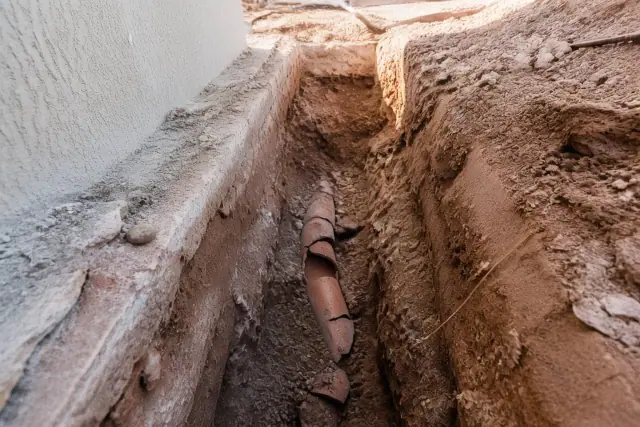
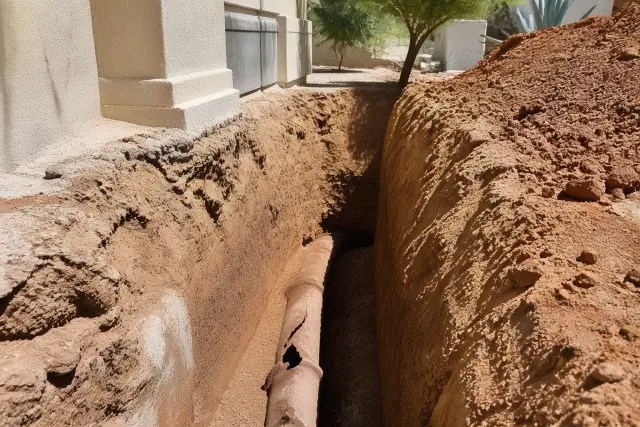
Deep trench excavation for a sewer line repair revealing cracked pipe in Phoenix, AZ.

We locate cracks, offset joints, bellies, and root intrusion with a camera before choosing a targeted spot repair or trenchless method. A post-repair camera pass documents the finished pipe. Explore Service

Explore Service

Sewer Line Replacement

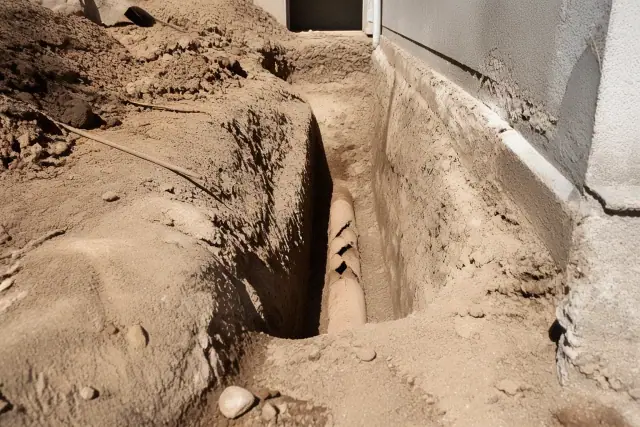
Deep trench showing cracked terra cotta sewer pipe and desert soil during a foundation repair in Phoenix, AZ.

Collapsed lines and deteriorated clay or Orangeburg pipe may need partial or full replacement. Length, depth, access, pipe material, and the selected method shape the scope and cost. Explore Service

Explore Service

Drain Cleaning

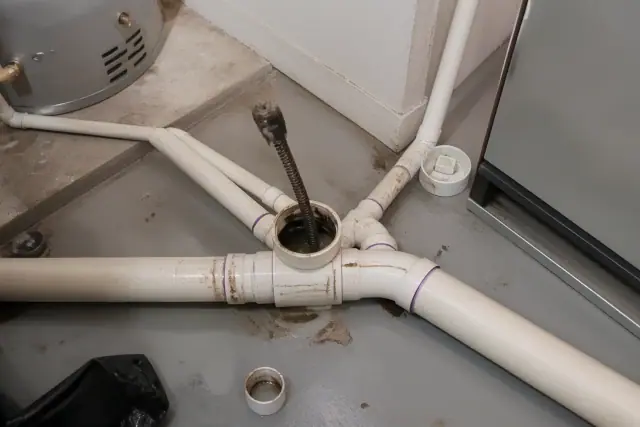
Drain snake cable and equipment cleaning a PVC floor drain junction in an industrial basement in Phoenix, AZ.

Motorized cable equipment clears straightforward blockages, while main-line cleaning addresses grease, mineral scale, roots, and debris along the run to the city connection. Explore Service

Explore Service

Sewer Camera Inspection

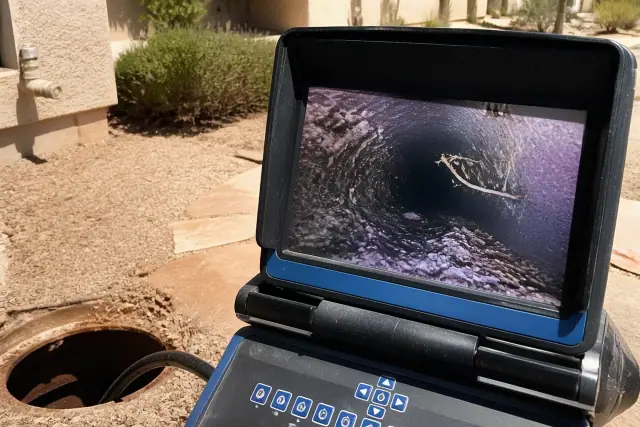
Sewer camera monitor displaying internal pipe inspection results at a Phoenix, AZ residential jobsite.

A waterproof camera records the lateral with distance markers, while PACP terminology identifies cracks, offsets, roots, bellies, and scale. Customers receive footage and a written pipe assessment summary.

Hydro Jetting

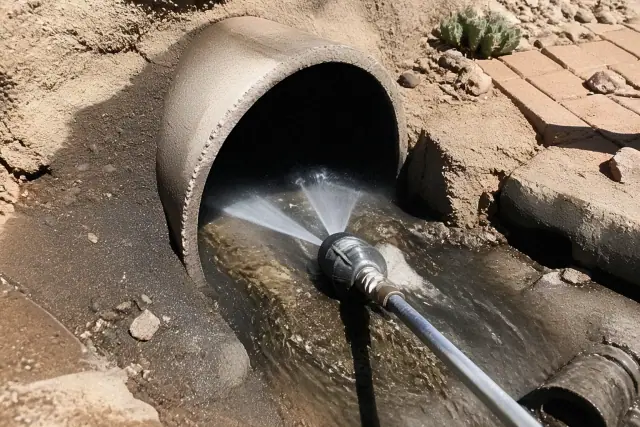
High-pressure hose clearing debris from a residential drainage pipe in Phoenix, AZ.

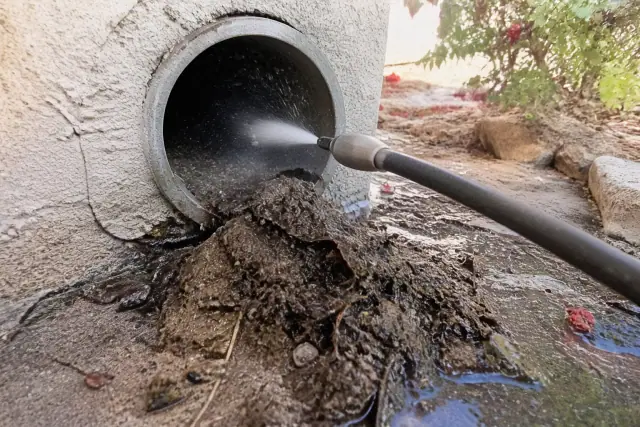
A specialized nozzle sends water through the line at a typical 3,000 to 4,000 psi, scouring the pipe's interior instead of merely opening a small path through the clog.

Main Sewer Line Cleaning

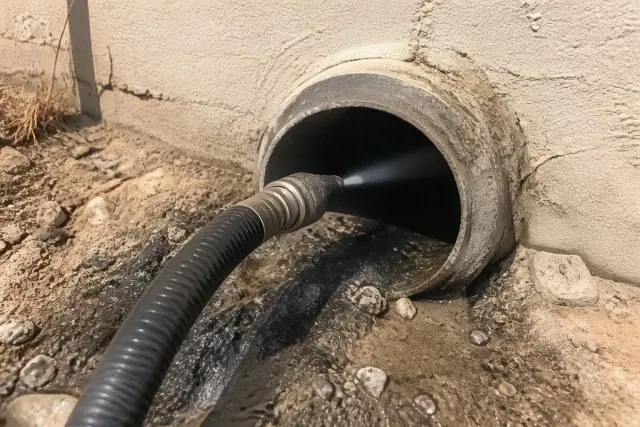
Hydro-jetting nozzle cleaning a sewer pipe with debris in Phoenix, AZ.

Cleaning the full run from the cleanout to the city connection can remove accumulated grease, mineral scale, roots, and debris that affect multiple fixtures at once.

Trenchless Sewer Repair

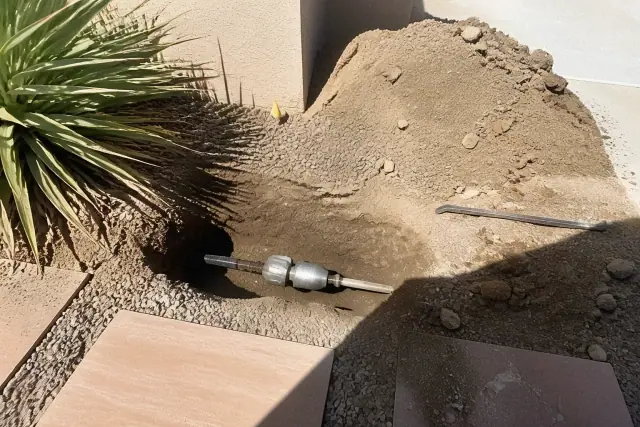
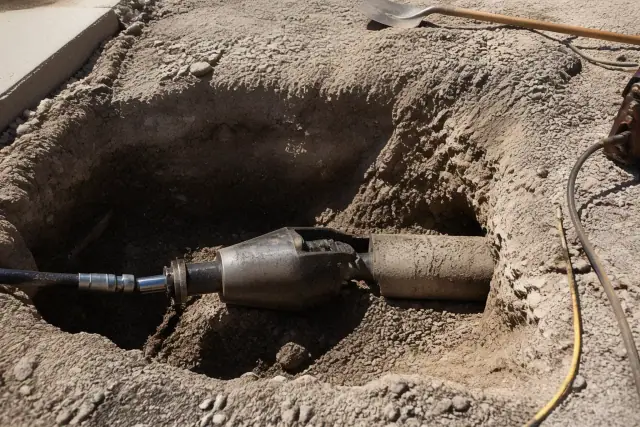
Hydraulic bursting head inside a trenchless sewer repair pit at a jobsite in Phoenix, AZ.

Pipe lining and pipe bursting work through one or two small access pits, helping preserve irrigation, mature landscaping, driveways, pavers, and pool-area hardscape.

Sewer Pipe Lining

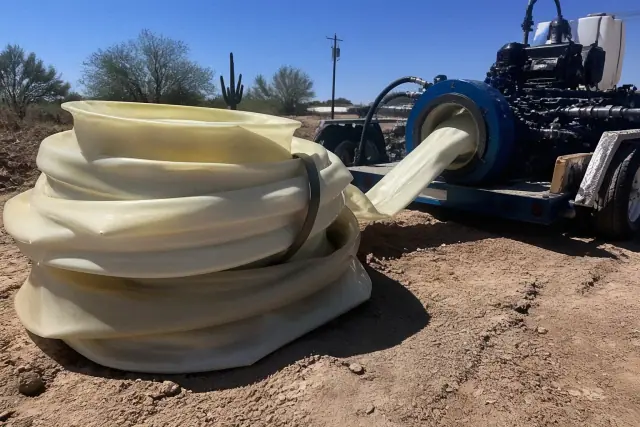
Resin-coated pipe liner and hydraulic inversion machine at a job site in Phoenix, AZ.

A resin-saturated felt liner cures inside the existing pipe to ASTM F1216 specifications, creating a jointless pipe within the old line when its alignment can support lining.

Sewer Pipe Bursting

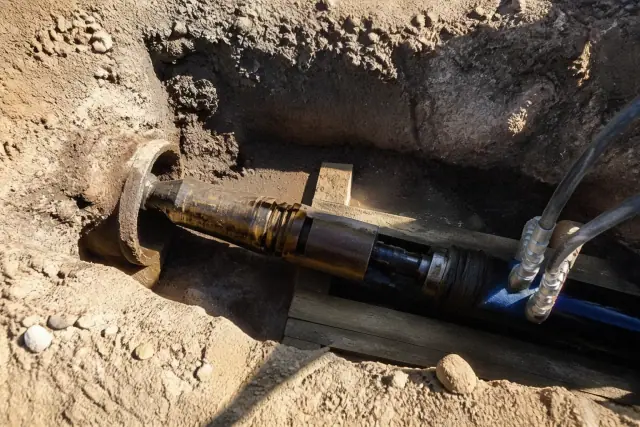
Hydraulic bursting head inside an open pipe trench at a residential job site in Phoenix, AZ.

A bursting head fractures the failed pipe outward while pulling fused HDPE into place, making this method useful when collapsed sections cannot be bridged by a liner.

Commercial Sewer Services

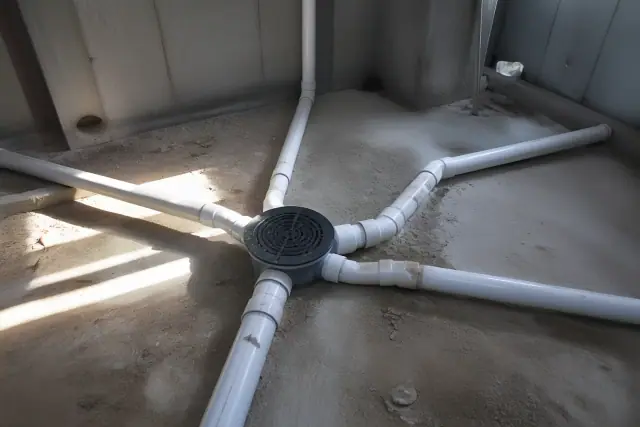
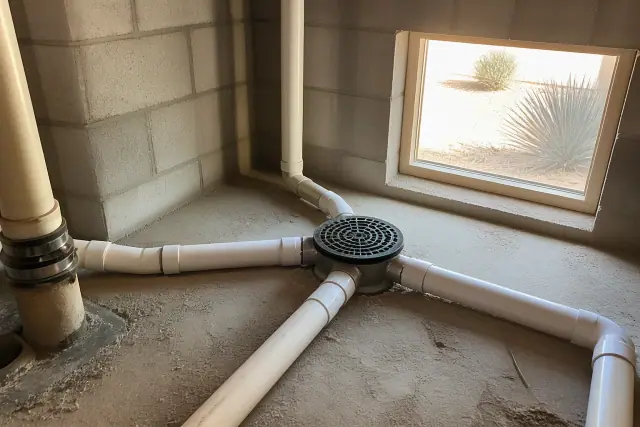
Intersecting PVC drainage pipes leading to a central floor drain in an industrial basement in Phoenix, AZ.

Services include large-scale main repair and replacement, industrial drain cleaning, restaurant grease-line jetting, and shared-lateral work for apartments and multi-unit buildings.

Specialized Sewer Solutions

Advanced Repair & Maintenance Options

Some properties need more than a one-time clearing. Trenchless renewal, residential system work, commercial programs, and preventive maintenance address pipe condition, access constraints, usage patterns, and recurring risk.

Hydraulic bursting head positioned in a small pipe entry pit at a trenchless lining jobsite in Phoenix, AZ.

Trenchless Lining & Bursting

Lining and bursting reduce surface disruption when a driveway, mature tree, pool deck, irrigation line, or established landscape sits over the damaged lateral.

  • One or two small access pits instead of a continuous trench
  • Cured-in-place lining installed to ASTM F1216 specifications
  • Jointless liner construction that removes root-entry seams
  • Fused HDPE for lines with collapse that lining cannot bridge
  • Hardscape and landscaping usually remain in place
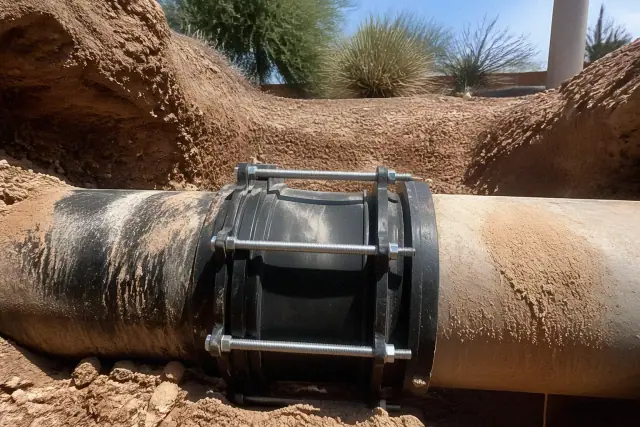
Underground pipe coupling with rubberized gaskets at a residential sewer job site in Phoenix, AZ.

Residential Sewer Support

Residential work extends beyond clearing a clog to the connections, access points, vents, and pumps that keep a Phoenix property's wastewater moving.

  • Broken sewer line repair
  • Sewer cleanout installation or replacement
  • Sewer vent stack repair
  • New sewer connections for additions or septic conversions
  • Sewer grinder pump installation and service where grade prevents gravity flow
PVC drainage pipes leading to a floor drain in a Phoenix, AZ basement utility room.

Commercial Sewer Programs

Commercial service is matched to daily flow, grease load, occupancy, and the documentation or permitting needs of each property.

  • Recurring restaurant grease-line jetting
  • Shared-lateral work for apartments and multi-unit buildings
  • Industrial drain cleaning with discharge requirements in mind
  • Camera footage for property records or insurance files
  • Permit and inspection coordination for tie-ins and larger-diameter lines
Hydro-jetting equipment cleaning a sewer pipe near a stucco wall in Phoenix, AZ.

Preventive Sewer Maintenance

Inspection and cleaning intervals are based on pipe age, root history, and property use rather than a one-size schedule.

  • Jetting every twelve to eighteen months for recurring root or buildup problems
  • Camera checks every one to two years for aging clay or Orangeburg laterals
  • Quarterly service can fit high-volume restaurant kitchens
  • Annual service can fit lower-flow office or retail properties
  • Camera follow-up distinguishes a cleaning need from structural repair
Standards, Documentation & Local Judgment

Why Phoenix Properties Choose Our Approach

The work is built around documented pipe condition, recognized inspection and lining standards, and repair choices suited to Phoenix soil, access, and property use. Customers can see what was found, understand the recommended method, and review the completed line.

NASSCO PACP Inspections

Camera findings are coded with NASSCO's Pipeline Assessment and Certification Program terminology, so cracks, offsets, roots, bellies, and scale are documented in a format familiar to inspectors and engineers.

ASTM F1216 Pipe Lining

Cured-in-place liners are installed to ASTM F1216 specifications, providing a defined standard for the resin-saturated liner and the jointless pipe formed inside the existing lateral.

Post-Repair Camera Verification

Every repair includes a final camera pass so the customer can view the completed pipe before backfill or surface restoration. Footage also creates a useful property record.

Watch for Changes Across Multiple Fixtures

Common Sewer Problems for Phoenix Properties

Gurgling, slow drains throughout the building, sewage odor, and yard wet spots often point to a main-line restriction or structural defect rather than one clogged fixture. Catching the restriction early can keep a $200 cleaning from becoming a $10,000 foundation sewer repair.

Request a Sewer Assessment

Whole-Home Slow Drains

When several fixtures drain slowly or a toilet gurgles as the washing machine empties, the restriction is likely in the main lateral rather than a single sink trap.

Sewage Backups & Odors

Sewage in a tub, odor near a floor drain or cleanout, and an unexplained wet area in the yard can signal a blocked, cracked, or leaking sewer line.

Root Intrusion

Roots from mature ash, mesquite, and olive trees seek moisture at the joints of older clay pipe, gradually narrowing the opening and worsening existing cracks.

Bellies & Offset Joints

Seasonal moisture changes in expansive clay and caliche soil can shift pipe sections, leaving low spots that hold waste or joints that no longer align.

Aging Clay & Orangeburg Pipe

Original laterals in 1950s homes and other Phoenix properties built before 1970 may have clay tile or deteriorated Orangeburg with cracks across much of the run.

Grease, Scale & Debris

Grease-heavy restaurant lines, mineral scale, food solids, and accumulated debris can coat pipe walls until cable cleaning alone no longer restores the full interior diameter.

How It Works

Our Phoenix Sewer Service Process

The process moves from symptoms and access to recorded evidence, a method comparison, completed work, and visual verification. Each step is designed to match the repair to the defect instead of guessing from surface symptoms.

01.

Review Symptoms & Access

We note backups, odors, slow fixtures, yard conditions, and the location of the cleanout or another safe access point before sending equipment into the line.

02.

Inspect the Sewer Line

A waterproof camera travels through the lateral while continuous video and distance markers capture the pipe material, condition, and location of each visible defect.

03.

Locate & Classify Defects

The technician identifies cracks, offsets, roots, bellies, collapse, and scale using PACP terminology, then prepares footage and a written assessment summary.

04.

Compare Repair Options

Depth, alignment, access, pipe material, damage severity, and the surface above the line determine whether cleaning, spot repair, lining, bursting, or open trenching fits.

05.

Complete the Work

The crew performs the selected cleaning, repair, or replacement while coordinating access, business hours, occupancy, landscaping, and required permits or inspections.

06.

Verify the Result

A post-work camera pass confirms the finished pipe and gives the customer footage before backfill or surface restoration is completed.

Sewer Service Across Phoenix Communities

Phoenix Sewers handles residential and commercial sewer work across Phoenix, including the neighborhoods, corridors, and property settings named below. Service recommendations reflect the pipe material, age, access, landscaping, and usage at each property.

  • Phoenix
  • Encanto
  • Desert Ridge
  • Ahwatukee
  • Sunnyslope
  • Maryvale
  • Garfield
  • Central Phoenix
  • Central Avenue corridor
  • Older Phoenix neighborhoods
  • Newer Phoenix developments
  • Phoenix residential properties
  • Phoenix commercial properties
  • Phoenix restaurants
  • Phoenix apartment communities
  • Phoenix multi-unit buildings
  • Phoenix industrial sites
  • Phoenix office properties
  • Phoenix retail properties
Deep trench exposing a cracked pipe in a desert landscape during a sewer service project in Phoenix, AZ.

Honest Sewer Service Feedback from Phoenix Customers

Customer Feedback
★ ★ ★ ★ ★

Our Encanto home's clay line kept backing up because of roots. The camera footage showed the exact section, and the crew explained why lining made more sense than digging through the yard.

AL
Amanda L.Encanto Homeowner
★ ★ ★ ★ ★

We had several trouble spots in an older Maryvale lateral. The replacement options, access needs, and work area were clear before the crew started, and the final camera video made the result easy to understand.

JR
Jason R.Maryvale Homeowner
★ ★ ★ ★ ★

Slow drains were affecting several units at our Central Phoenix property. Hydro jetting cleared the shared line, and the follow-up inspection helped us set a practical maintenance schedule.

PS
Priya S.Central Phoenix Property Manager
★ ★ ★ ★ ★

Grease buildup kept returning in our Phoenix restaurant line. The team worked around our business hours, cleaned the full run, and gave us camera footage for our records.

MT
Michael T.Phoenix Restaurant Owner
Get a Clear Sewer Assessment

Schedule Phoenix
Sewer
Service

Tell us what is backing up, draining slowly, or showing at the surface. We can inspect the line, explain the recorded findings, and outline the cleaning, repair, or replacement method that fits the pipe and property.

Phoenix Sewer Help

Phoenix Sewer Questions, Answered

These answers cover Phoenix's public sewer network, private laterals, inspection, cleaning, repair, replacement, maintenance, and service planning. A camera inspection is the most direct way to confirm what is happening inside a specific line.

Call Our Sewer Team

Yes. Phoenix took over its public sewer system in 1911 and began requiring household connections by 1915. The City of Phoenix now maintains close to 5,100 miles of sewer mains and roughly 102,000 manholes, while private laterals connecting homes and businesses to those mains remain the property owner's responsibility.

Slow drains across several fixtures, toilet gurgling when another appliance drains, sewage odor near a cleanout, a yard wet spot, or a backup into a tub can indicate a main-lateral problem. These patterns differ from a clog isolated to one sink or fixture.

Replacement is considered when a line has multiple failure points, extensive cracking, collapse, or deteriorated clay or Orangeburg along much of the run. Research cited in the source shows roughly 70 percent of buried pipe surviving to around 50 years, with most reaching the end of useful service life by 85 years, so pipe age is considered alongside camera evidence.

The two primary options are cured-in-place pipe lining and pipe bursting. Both can work through one or two access pits, which usually protects driveways, pavers, irrigation, pool-area hardscape, and mature landscaping from a continuous trench.

Lining cures a resin-saturated felt liner inside a pipe with sound enough alignment to support it, forming a jointless pipe within the old line. Bursting fractures the failed pipe outward while pulling fused HDPE into place, so it can address collapsed sections that a liner cannot bridge.

A waterproof camera records the lateral while distance markers identify where cracks, offsets, roots, bellies, and scale appear. The inspection follows NASSCO PACP terminology and produces footage plus a written assessment. A minor crack left for another two or three years can become a more extensive failure, so early documentation matters.

Cable equipment suits straightforward blockages, while hydro jetting is used for heavy grease, mineral scale, food solids, or root intrusion coating the pipe wall. The specialized nozzle typically operates in the 3,000 to 4,000 psi range and scours the full interior diameter instead of punching a narrow opening.

Properties with recurring roots or aging clay laterals may benefit from jetting every twelve to eighteen months and a camera check every one to two years. Commercial intervals depend on use: high-volume restaurant kitchens may need quarterly service, while lower-flow offices or retail properties may be inspected or cleaned annually.

Expansive clay and caliche soil contracts during dry periods and expands with monsoon moisture, stressing joints and creating offsets or bellies. Mature mesquite, ash, and olive roots also enter older jointed pipes, while original clay laterals in 1950s and other pre-1970 homes may already be deep into their service life.

Pipe length, depth, material, access, damage severity, and whether the work uses lining, bursting, or open trenching all affect the scope. Surfaces above the pipe, including concrete, pavers, landscaping, pool decks, and foundation areas, also influence the method and restoration needs.

A typical Phoenix residential trenchless lateral is often completed in one day, while traditional open-trench work can extend to multiple days. Many confirmed repair calls can receive same-day service, and some jobs that begin with a morning inspection are finished by evening, but the actual schedule depends on the recorded defect, access, depth, permits, and selected method.

Every repair includes a post-repair camera pass before backfill or surface restoration. The footage lets the customer view the finished pipe and provides a record of the completed work.

Residential work includes broken sewer line repair, cleanout installation or replacement, vent stack repair, new sewer connections for additions, septic-to-sewer conversions, and grinder pump installation or service where gravity flow is not possible. Camera inspection, drain cleaning, hydro jetting, lining, bursting, and replacement address the lateral itself.

Commercial services include large-scale main repair and replacement, industrial drain cleaning, recurring restaurant grease-line jetting, and shared-lateral work for apartments and multi-unit buildings. Work can be coordinated around business hours and occupancy, documented with camera footage, and planned with Arizona Department of Environmental Quality, Maricopa County Environmental Services Department, or City of Phoenix requirements when those rules apply.