Proudly serving Phoenix, Glendale, Scottsdale, Tempe, Mesa, Chandler & surrounding areasCall or Text 24/7: 480-259-3923
Aerial view of residential neighborhoods with desert landscaping and Saguaro cacti in Phoenix, AZ at golden hour.

Sewer Line Repair & Hydro Jetting Services in Gilbert, AZ

Phoenix Sewers provides sewer line repair, sewer line replacement, and drain cleaning for homes and businesses in Gilbert, Arizona. Our crews also perform sewer camera inspections, hydro jetting, main sewer line cleaning, trenchless sewer repair, pipe lining, and pipe bursting. We work across established areas near the Heritage District and newer communities including Morrison Ranch, Power Ranch, Agritopia, Seville, and Val Vista Lakes. Commercial sewer services are available for restaurants, retail centers, offices, and multi-tenant properties.

Expansive desert clay, buried caliche, monsoon moisture swings, and mature tree roots can shift joints or restrict older sewer laterals. Some pockets near the Consolidated Canal also hold more soil moisture, while hard-water mineral scale can narrow older pipe sections. Licensed, insured crews start with recorded camera footage so repair choices are based on cracks, bellies, root masses, and offset joints that are actually present. We provide a written scope and price before digging or lining, coordinate required Town of Gilbert permits, and verify completed work with a final camera pass.

Call when multiple drains slow at once, toilets gurgle, sewage odors appear, or water surfaces near a cleanout. Same-day response is available for active backups, and the phone line supports 24/7 emergency calls across Gilbert.

★ ★ ★ ★ ★4.9/5 Average Rating - 20+ Years of Experience - Gilbert Sewer Specialists - Residential & Commercial
Sewer Services

Gilbert Sewer Services for Homes & Businesses

Gilbert's 287,285 residents as of 2025 span newer subdivisions and older properties near the Heritage District, so sewer work varies by pipe material, depth, access, and defect. Phoenix Sewers matches each service to recorded camera findings instead of assuming every slow drain needs replacement. Customers seeking the same service overview for Peoria, AZ can use that location page for its area-specific details.

Sewer Line Repair

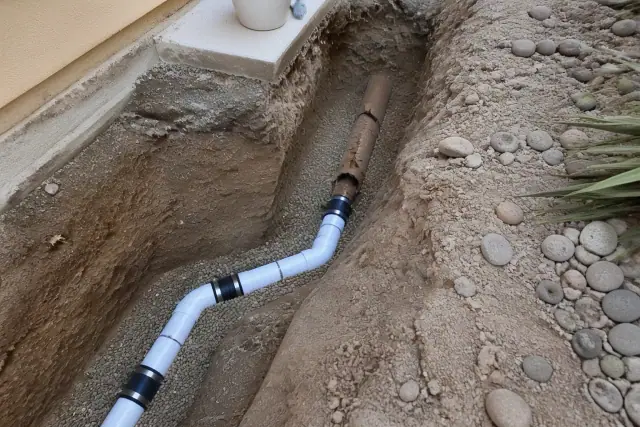
Sewer line repair featuring new PVC pipe and gravel backfill in a deep trench at a residential property in Gilbert, AZ.

Cracked joints, bellied pipe, and root intrusion drive many Gilbert repair calls. A camera inspection identifies the defect and its distance from the cleanout before we recommend a spot repair, lining, pipe bursting, or excavation. Repair costs typically run $150 to $3,800 depending on depth, material, and access, with the scope explained before digging begins.

Explore Service

Sewer Line Replacement

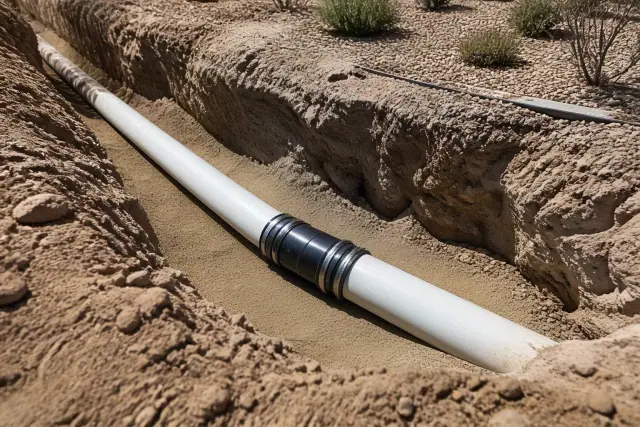
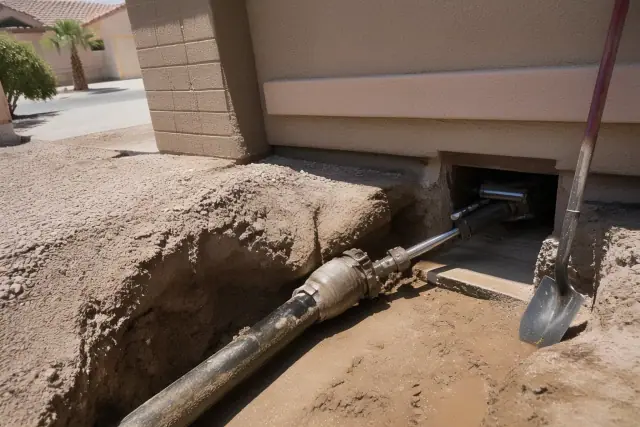
New sewer pipe coupling with stainless-steel bands installed in a residential trench in Gilbert, AZ.

Collapsed, severely offset, or deeply corroded lines may require full replacement. Gilbert sewer replacement generally costs $1,388 to $5,323 total, or roughly $50 to $250 per linear foot, depending on material, trench depth, access, and restoration. We install SDR-35 or Schedule 40 PVC with proper bedding and compaction, then coordinate the applicable Town of Gilbert permit and final inspection.

Explore Service

Drain Cleaning

A professional auger snake clearing sewer pipes in a utility room basement in Gilbert, AZ.

Mechanical drain cleaning clears isolated fixture stoppages and full main-line clogs caused by grease, hard-water mineral scale, or early root intrusion. When the blockage may be farther down the lateral, we inspect afterward to verify its source. For homes with mature trees near the sewer line, cleaning on a one- to two-year cycle can help reduce backup risk.

Explore Service

Sewer Camera Inspection

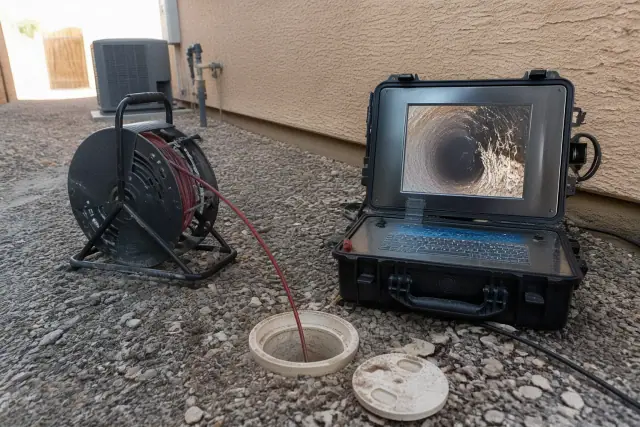
Sewer camera inspection showing pipe walls and tree roots at a residential property in Gilbert, AZ.

A high-resolution camera reveals cracks, bellies, root masses, corrosion, and offset joints without exploratory digging. We record the footage and measure each defect from the nearest cleanout so the estimate can target the actual problem. Pre-purchase inspections are especially useful for Gilbert homes built before the 1980s that may retain clay or Orangeburg piping.

Hydro Jetting

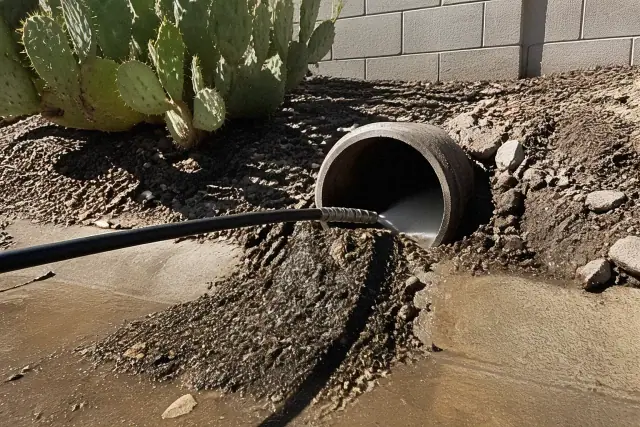
Hydro jetting equipment clearing debris from a residential drainage pipe in Gilbert, AZ.

Hydro jetting uses high-pressure water, typically 3,000 to 4,000 PSI, to scour grease, mineral scale, and roots from pipe walls rather than opening only a narrow path through a clog. It can prepare older cast-iron sections for camera inspection or lining. The method is also suited to restaurants and multi-unit properties with recurring grease-related blockages.

Main Sewer Line Cleaning

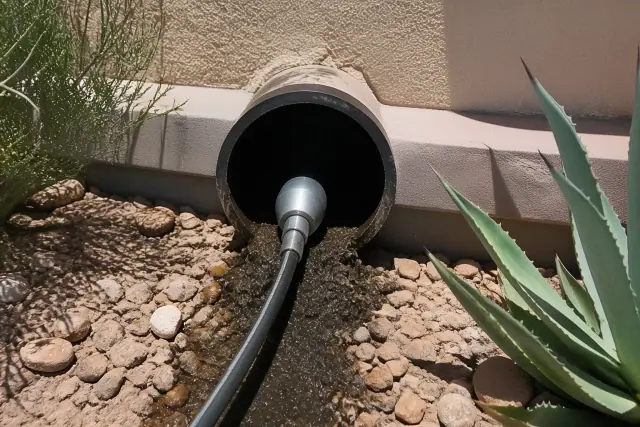
High-pressure hydro-jetting nozzle cleaning a main sewer line at a job site in Gilbert, AZ.

Main sewer line cleaning addresses blockages that affect several fixtures or an entire building. Residential schedules depend on tree roots and past clogs, while food-service and multi-tenant properties may need quarterly or semi-annual cleaning based on tenant mix. Camera documentation after service helps property managers track recurring buildup and maintenance needs.

Trenchless Sewer Repair

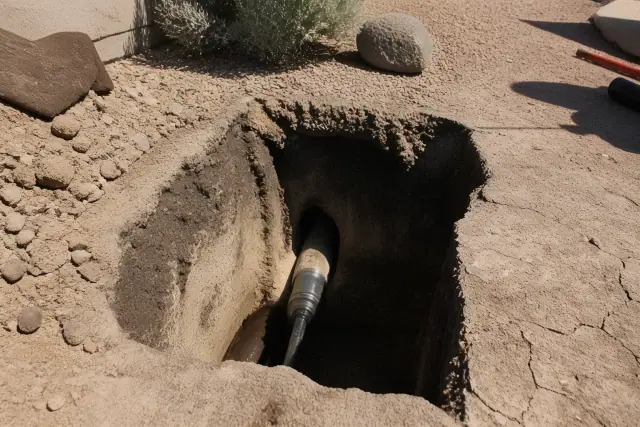
Hydraulic bursting head positioned in an entry pit for sewer pipe repair in Gilbert, AZ.

Trenchless sewer repair can preserve driveways, pool decking, mature landscaping, and narrow side yards by limiting excavation. Pipe bursting or cured-in-place lining may save 30 to 50 percent compared with traditional dig-and-replace after hauling and restoration are included. Camera findings determine whether the existing line has the condition and access needed for a trenchless method.

Sewer Pipe Lining

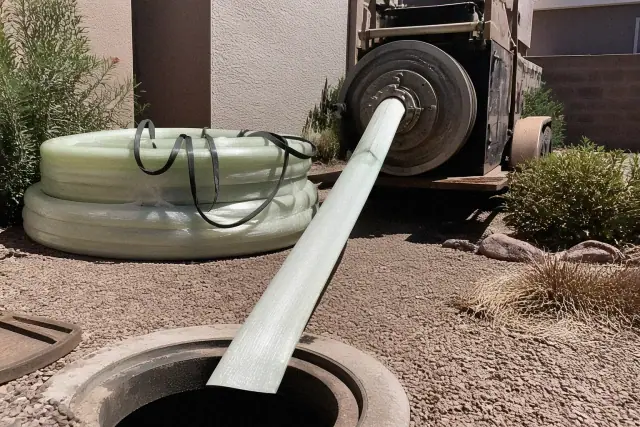
Resin coated flexible liner being fed into a sewer pipe at a job site in Gilbert, AZ.

Cured-in-place pipe lining places a resin-saturated liner inside an existing clay or cast-iron line and cures it into a jointless, corrosion-resistant pipe. The method follows NASSCO-recognized standards and works best when a cracked line still holds its structural shape. Most residential lining jobs finish in a single day without a full-length trench.

Sewer Pipe Bursting

Hydraulic bursting head positioned in a trenchless sewer pipe repair pit in Gilbert, AZ.

Pipe bursting fractures the failed pipe outward while pulling new HDPE through the existing route. On a 60-foot lateral, the method can replace a full run through two access pits roughly 3 feet square instead of opening the entire yard. Most residential trenchless work takes one to two days, subject to line length and access.

Commercial Sewer Services

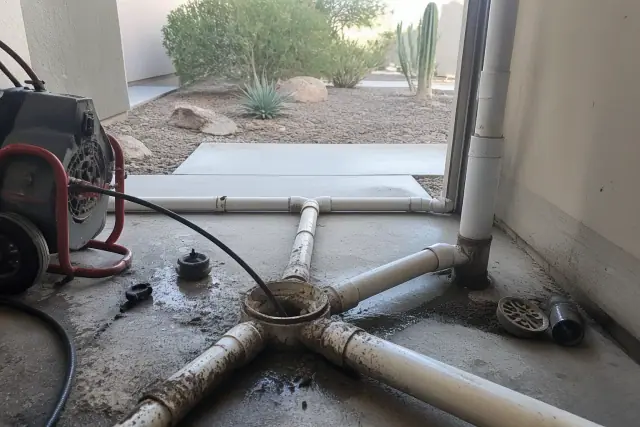
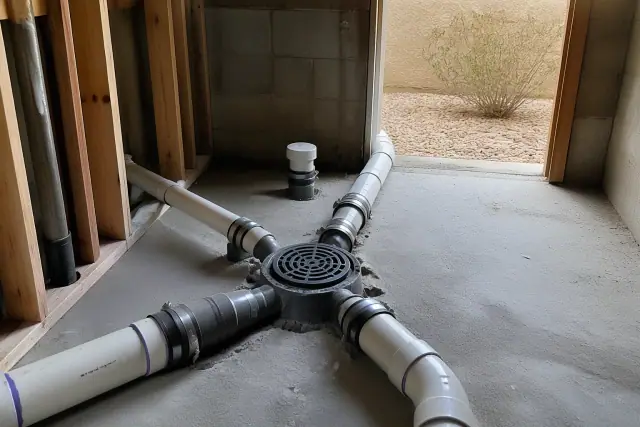
PVC drainage pipes and floor drain in a commercial utility room at a jobsite in Gilbert, AZ.

Commercial service includes grease-line hydro jetting, due-diligence camera inspections, scheduled main-line cleaning, and repair or replacement planning. Our equipment can clear 6-inch and larger commercial lines and inspect longer runs found at restaurants, retail centers, offices, industrial sites, and multi-tenant properties. Each visit can be documented for maintenance records and health-department review.

Repair Planning

How We Match Sewer Work to Gilbert Properties

Choosing a sewer method starts with the recorded condition of the pipe, not a one-size-fits-all recommendation. We compare defect type, grade, pipe material, structural shape, access, restoration impact, permit needs, and cost before presenting the practical options.

Recorded Camera Diagnosis

Recorded footage shows whether the issue is a localized crack, root mass, offset joint, belly, corrosion, or collapse. Measuring each defect from the cleanout lets the scope target the affected section instead of relying on guesswork.

Spot Repair vs Full Replacement

A localized crack may need only a spot repair or short lined section. A collapsed, severely bellied, or extensively corroded lateral may need pipe bursting or excavation to restore grade and flow.

Trenchless Access and Restoration

Driveways, pool decking, HOA landscaping, and tight side yards can make open trench restoration expensive. When the pipe condition and access points allow it, lining or bursting reduces surface disruption while addressing the failed line.

Pipe Material and Structural Shape

Gilbert homes from the 1970s and 1980s may still have clay or Orangeburg laterals nearing a 50- to 60-year service life, while newer properties commonly use PVC. Lining needs a pipe that retains its shape; severe collapse or grade failure calls for a replacement method.

Permits and Inspection Requirements

Sewer connection work may require Town of Gilbert Engineering Department permits and inspections, while main-line tie-ins must meet Maricopa County Environmental Services Department wastewater standards. The repair plan accounts for approval, bedding, backfill, and compaction before the trench is closed.

Written Scope, Price, and Timeline

After reviewing the footage, we rank options by cost and disruption and provide a written scope before digging or lining begins. The estimate reflects line depth, material, access, repair length, permit work, and surface restoration rather than a phone-quote guess.

Gilbert Sewer Problems

Common Sewer Warning Signs for Gilbert Properties

A main-line problem often affects several fixtures at once rather than a single sink or shower. Gurgling toilets, whole-home slow drains, sewage odor, wastewater backing up when an appliance runs, and standing water near a cleanout all warrant camera diagnosis before the condition worsens.

Request Sewer Inspection

Root Intrusion

Mature ash and eucalyptus roots in Val Vista Lakes, Circle G, and the Heritage District can enter small joint cracks in search of moisture. A root-hair opening can widen into a full blockage within a couple of years, so jetting should be followed by a camera check for lining or spot-repair needs.

Bellied or Offset Pipe

Soil settlement can create a low section where solids collect, or shift joints out of alignment. Snaking or jetting may clear the immediate blockage, but a true belly needs excavation or pipe bursting to correct the grade.

Whole-Home Slow Drains

When toilets, showers, and sinks slow together, the restriction is often in the building sewer rather than one fixture branch. Water entering a shower when the washing machine runs is another signal that the main lateral needs inspection.

Sewage Odors and Yard Water

Sewage odor, saturated soil, or standing water near a cleanout can indicate an active leak or backup. Fast diagnosis helps limit contamination exposure, soil saturation, and additional excavation around yards or slab foundations.

Grease and Mineral Scale

Kitchen grease and mineral scale from Gilbert's hard water can narrow older pipe sections gradually. Mechanical cleaning can open a clog, while hydro jetting scours buildup from the wall when a more thorough cleaning is appropriate.

Heat and Monsoon Soil Movement

Summer temperatures regularly exceeding 110 degrees can stress shallow PVC and joint sealants, while monsoon moisture in July and August expands Gilbert's clay soil. The cycle is especially relevant to homes built during the 2000 to 2008 growth period, where movement near slabs can show up first as slow drains or sewer-gas odor.

Why Choose Us

Why Choose Phoenix Sewers in Gilbert, AZ?

Phoenix Sewers brings licensed, insured crews familiar with Arizona Registrar of Contractors requirements, locally adopted Uniform Plumbing Code rules, and Town of Gilbert permit procedures. Each recommendation is supported by recorded footage, a written scope, and options ranked by cost and disruption. Repairs conclude with a final camera pass and normal-use flow test.

Local Soil and Pipe-Era Knowledge

Crews recognize how clay, caliche, canal-fed soil moisture, mature roots, and different Gilbert construction eras affect buried laterals. That local context helps distinguish a surface clog from a joint, grade, or material failure.

Documented Inspection and Pricing

You receive camera footage, defect locations, repair options, and a written price before work starts. Documentation continues after commercial maintenance visits and after repairs that require a final verification pass.

Code-Compliant Repair Closeout

When permits apply, we coordinate inspection and confirm bedding, backfill, and compaction before closing the trench. A final camera pass checks flow and joint integrity under normal use conditions before the job is considered complete.

Documented Process

Our Sewer Repair Process in Gilbert, AZ

The process moves from symptoms to recorded evidence, written options, code-compliant work, and final verification. Each step is designed to define the problem before excavation and document the result before closeout.

01.

Discuss Symptoms and Locate the Cleanout

We start with the drains, odors, backups, and property areas involved, then identify the best cleanout or access point. This initial context guides the camera route and helps separate a fixture issue from a main-line problem.

02.

Record the Sewer Camera Inspection

A high-resolution camera travels through the line while the footage is recorded. We look for roots, cracks, bellies, offsets, corrosion, collapse, grease, and scale rather than diagnosing from symptoms alone.

03.

Mark Defects and Review the Footage

Each defect is measured from the nearest cleanout and matched to its pipe section. We walk through the footage with you so the proposed scope has a visible reason behind it.

04.

Compare Repair Options and Scope

Spot repair, lining, bursting, cleaning, or excavation options are compared by suitability, cost, disruption, and restoration. You receive a written scope and price before the selected work begins.

05.

Complete Permits, Repair, and Compaction

We coordinate required Town of Gilbert approvals, complete the chosen repair, and prepare the work for inspection. Excavated sections receive the specified bedding, backfill, and compaction before surface restoration.

06.

Run the Final Camera and Flow Test

A final camera pass checks the repaired section, flow path, and joint integrity. We also test the sewer under normal use conditions and provide the closeout documentation tied to the completed scope.

Repair Outcomes

Sewer Solutions for Gilbert Homes & Businesses

Case Study 1: Older Homes: Camera inspection can isolate cracked clay or Orangeburg sections so a spot repair or lining is considered before a full lateral replacement.

Case Study 2: Landscaped Properties: Trenchless lining or bursting can protect driveways, pool decking, citrus trees, and HOA landscaping when pipe condition and access support the method.

Case Study 3: Commercial Sites: Scheduled jetting, main-line cleaning, camera inspections, and visit documentation help restaurants, retail centers, offices, and multi-tenant properties manage recurring sewer risks.

Schedule Sewer Service

Schedule a Gilbert
Sewer Line
Inspection

Request a camera-backed estimate for slow drains, recurring clogs, sewage odors, active backups, or a planned sewer replacement. Phoenix Sewers will document the line condition, explain the practical options, and provide a written scope before work begins.

Gilbert Sewer Help

FAQs About Sewer Line Repair in Gilbert, AZ

These answers cover repair methods, costs, timing, maintenance, permits, and the local conditions that affect Gilbert sewer lines. A recorded camera inspection is still the starting point for recommendations tied to a specific property.

Call Phoenix Sewers

Most spot repairs and trenchless jobs take one to two days, while a straightforward residential lining job can finish in a single day. Full excavation replacement typically takes two to four days depending on trench length, depth, compaction requirements, and monsoon-season soil conditions.

The method depends on camera findings. A localized crack may need a spot repair or cured-in-place lining, while collapse, severe bellies, or extensive corrosion may require pipe bursting or open excavation.

Replacement typically ranges from $1,388 to $5,323 total, or about $50 to $250 per linear foot. Across the source's residential examples, work spans $150 for a straightforward spot repair to $5,323 for a full lateral replacement, with the national average project near $3,319; actual cost depends on pipe material, depth, length, access, method, and restoration.

Root intrusion, bellied pipe from settlement, offset joints, grease, and hard-water mineral scale are common causes described for Gilbert properties. Expansive clay, caliche, and monsoon moisture can stress buried joints, so a camera is needed to identify the specific restriction or defect.

Trenchless work is often suitable when landscaping, decking, hardscape, or limited side-yard access makes excavation disruptive. A camera inspection must confirm the pipe's structural shape, grade, defect type, and usable access points before lining or bursting is recommended.

Homes with mature trees near the lateral may benefit from camera inspection every two to three years, and inspection before purchase is recommended for homes over 20 years old. Clay or Orangeburg lines nearing a 50- to 60-year service life may need closer monitoring based on their documented condition.

Gurgling toilets, several slow drains, sewage odor, yard water near a cleanout, or wastewater entering a shower when an appliance drains can indicate a main-line issue. A single slow fixture may be isolated, but whole-property symptoms call for camera diagnosis.

Hydro jetting scours grease, mineral scale, and root intrusion from pipe walls more thoroughly than simply opening a narrow path through a clog. The line may be camera-inspected afterward to determine whether a crack, offset, or other defect still needs repair.

Replacement work may use SDR-35 or Schedule 40 PVC with proper bedding and compaction, while pipe bursting pulls new HDPE through the existing route. Cured-in-place lining uses a resin-saturated liner to form a jointless pipe inside a structurally positioned clay or cast-iron line.

Sewer connection work may require permits and inspection through the Town of Gilbert Engineering Department. Main-line tie-ins must also meet Maricopa County Environmental Services Department wastewater standards, so the scope should account for approval, backfill, and compaction requirements.

A resin-saturated liner is inserted into the existing sewer and cured into a jointless, corrosion-resistant pipe. It is intended for cracked lines that still hold their structural shape and avoids excavating a trench along the entire route.

Pipe bursting is considered when a failed line needs full replacement but its existing path can guide a new HDPE pipe. Lining is better suited to cracked pipe that retains its shape, while severe grade problems may still require excavation.

Yes. The source covers homes as well as restaurants, retail centers, office parks, industrial sites, and multi-tenant properties, with camera inspection, jetting, cleaning, repair, and replacement planning matched to the line and usage.

Food-service properties may benefit from quarterly or semi-annual main-line cleaning depending on tenant mix and grease load. Camera documentation after service helps track buildup and adjust the maintenance schedule.

Expansive clay and caliche move as moisture changes, while monsoon storms can saturate soil around already stressed lines. High summer heat, canal-fed moisture in some pockets, and mature roots can add stress or deterioration, making recorded inspection more reliable than assumptions based on age alone.