Proudly serving Phoenix, Glendale, Scottsdale, Tempe, Mesa, Chandler & surrounding areasCall or Text 24/7: 480-259-3923
Aerial view of residential neighborhoods with desert landscaping and Saguaro cacti in Phoenix, AZ at golden hour.

Sewer Line Replacement in Phoenix, AZ for Residential & Commercial Pipe Systems

Phoenix Sewers provides sewer line replacement, sewer line repair, drain cleaning, sewer camera inspection, hydro jetting, pipe lining, and pipe bursting for homes and commercial properties in Phoenix, Arizona. We work on residential laterals in older neighborhoods and main lines across the metro area. Every recommendation begins with video inspection so the repair method matches the pipe's actual condition. Our team also handles full open-trench replacement when grade, depth, or a collapse rules out a trenchless approach.

Older Phoenix homes often have original clay or cast iron laterals that face stress from expansive soil, caliche, and monsoon moisture swings. Roots from mesquite, palo verde, and citrus trees can enter cracked joints, while corrosion and soil movement can separate or weaken pipe. We use camera footage to show you root intrusion, corrosion, bellies, or breaks before recommending localized repair, lining, bursting, or replacement. Technicians hold the licensing required by the Arizona Registrar of Contractors, and excavation and lateral tie-ins are coordinated with City of Phoenix Water Services permitting requirements.

Most residential laterals in the older core of Phoenix are 4-inch clay or cast iron pipe installed 4 to 8 feet deep, while newer construction uses PVC sewer line rated to ASTM D3034 standards. Camera inspection documents the material, diameter, depth markers, joints, and exact location of damage before work begins.

Phoenix Sewers provides sewer line replacement throughout Phoenix and the surrounding metro, including Scottsdale, Tempe, Mesa, Glendale, and Chandler.

★ ★ ★ ★ ★4.9/5 Average Rating · 20+ Years of Experience · Thousands of Customers Helped · Licensed & Insured · Residential & Commercial

Phoenix Sewer Line Replacement Options

What Does Sewer Line Replacement Involve?

Sewer line replacement removes or bypasses failed pipe, whether the damage affects one section or the entire lateral between a property's cleanout and the City main. New pipe is installed to the required slope and current plumbing code.

In Phoenix, the property owner is responsible for the private lateral from the cleanout to its connection with the City of Phoenix main. Replacing widespread damage helps prevent a partial failure from becoming a complete collapse under shifting soil and recurring root pressure.

Slow drainage at several fixtures, gurgling toilets, sewage odor near the cleanout, recurring backups, and soggy soil above the lateral can all point to more than a simple clog. A sewer camera inspection distinguishes an isolated break from corrosion, separated joints, bellying, or failure along a longer run.

Benefits of a Correctly Matched Replacement

The strongest result comes from matching the method to the pipe's condition, depth, grade, material, and access. Camera evidence helps determine whether a localized repair, lining, bursting, or open-trench replacement will solve the problem without unnecessary excavation.

  • Addresses widespread breaks, corrosion, root intrusion, and separated joints
  • Can provide 50 or more years of service from PVC installed to current code
  • Uses trenchless access where conditions allow to preserve landscaping and hardscape
  • Restores gravity flow with the new line set to the proper slope
  • Adds or relocates cleanouts when needed for future maintenance access
  • Uses bedding material and code-appropriate joints before backfill
  • Confirms flow and slope with water testing and a final camera inspection
  • Provides final footage as a record of the completed underground work
Repair, Replacement & Maintenance

Complete Sewer Line Services

Phoenix Sewers can diagnose the line, clear buildup, repair isolated damage, or replace a failed lateral or main. The service plan is based on camera findings and the property's actual access, pipe material, depth, and grade.

Sewer Camera Inspection

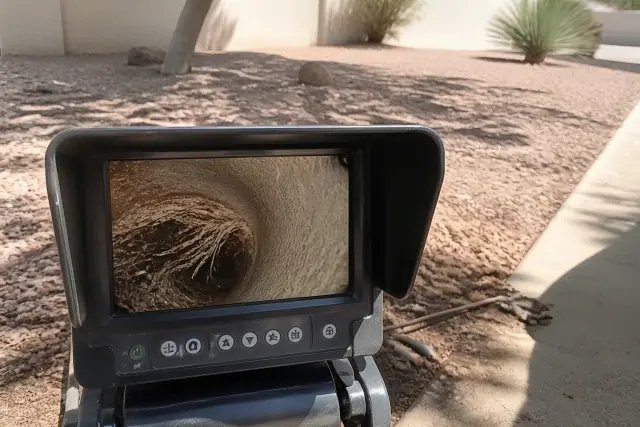
Sewer camera inspection monitor showing pipe damage and tree roots at a job site in Phoenix, AZ.

A self-leveling camera documents pipe material, diameter, depth markers, joint condition, corrosion, root intrusion, and break locations. That footage provides precise repair coordinates and lets you review the reason behind the recommendation.

Request Estimate

Localized Sewer Line Repair

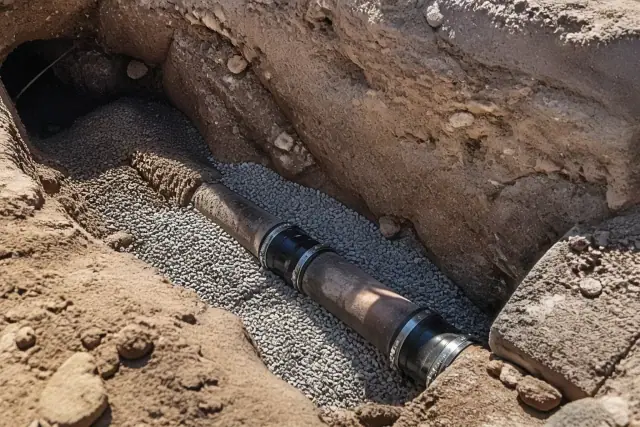
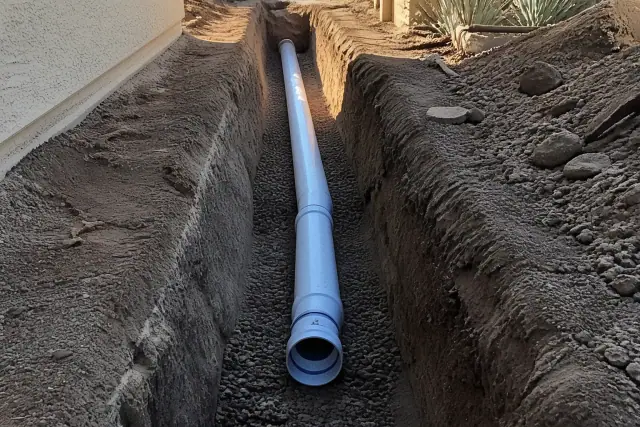
A trench with new sewer pipe couplings and gravel bedding in dry desert soil during a job in Phoenix, AZ.

An isolated break, offset joint, or root entry point can often be repaired when the rest of the line remains sound on camera. A localized repair or short lining section avoids replacing pipe that is still performing properly.

Request Estimate

Full Sewer Line Replacement

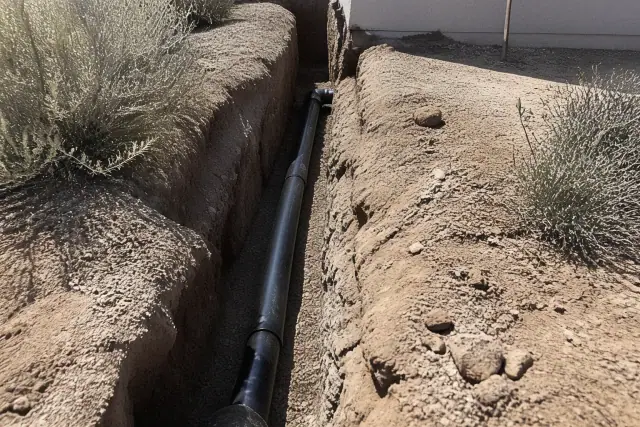
New HDPE pipe installed in a deep trench during a sewer line replacement project in Phoenix, AZ.

Full replacement is appropriate when damage extends through several areas, the material has reached the end of its service life, or repeated spot repairs have not stopped backups. The failed run is replaced with new pipe sized and graded for reliable gravity drainage.

Request Estimate

Cured-in-Place Pipe Lining

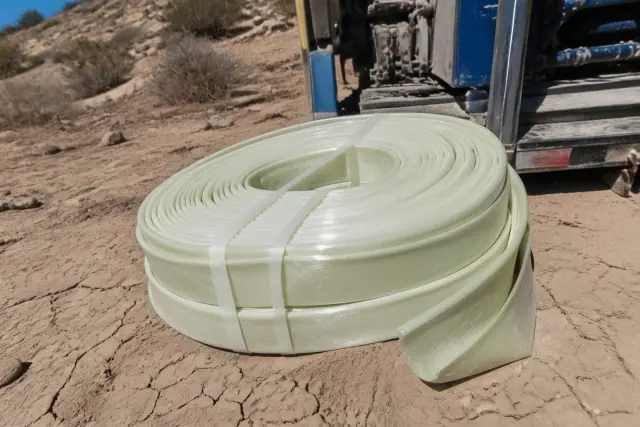
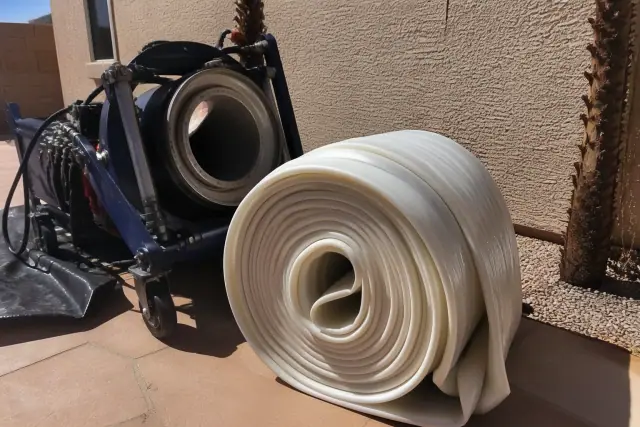
Resin-coated flexible liner material for sewer pipe repair coiled on the cracked desert soil in Phoenix, AZ.

Cured-in-place pipe lining inserts a resin-saturated felt tube and cures it inside a structurally sound host pipe. It can address corrosion and hairline cracking in clay or cast iron without opening a continuous trench.

Request Estimate

Sewer Pipe Bursting

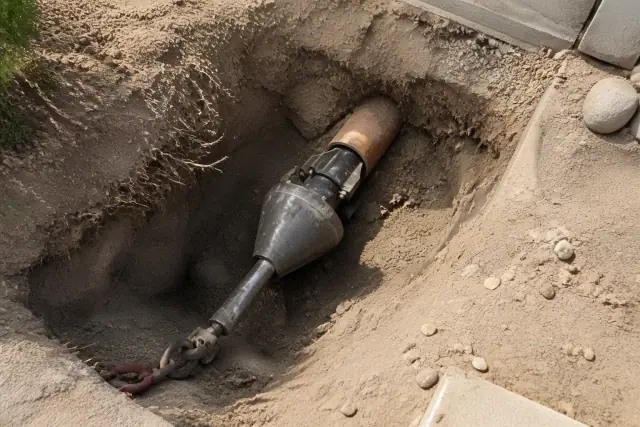
A hydraulic bursting head inside a trenchless sewer line replacement pit in Phoenix, AZ.

Pipe bursting pulls new HDPE pipe through the old route while a bursting head fractures and displaces the failed pipe. It is suited to collapsed, badly fractured, or undersized lines when access and site conditions support the method.

Request Estimate

Hydro Jetting and Main Line Cleaning

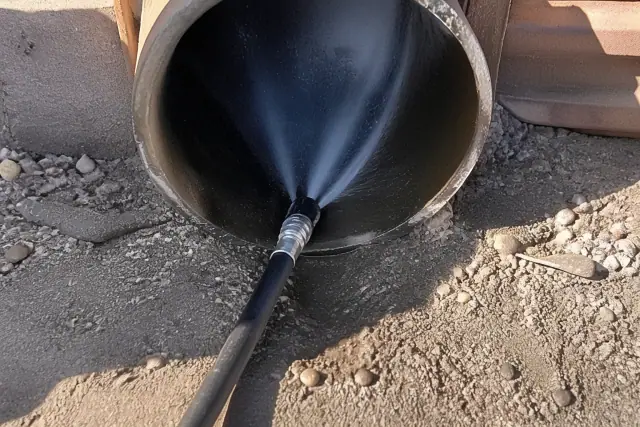
High-pressure hose nozzle cleaning debris from an industrial sewer pipe in Phoenix, AZ.

Hydro jetting scours grease, sludge, and root masses from the full interior diameter instead of opening only a narrow path through a blockage. Main line cleaning can restore flow, prepare a line for camera review, and support preventive maintenance.

Request Estimate
Replacement Options

Replacement Methods for Phoenix Properties

The right method depends on whether the existing pipe can support a liner, must be displaced by bursting, or needs to be exposed and removed. Property use and surface conditions also shape the plan for residential laterals and commercial main lines.

Resin-coated Cured-in-Place Pipe liner coiled at a sewer line replacement jobsite in Phoenix, AZ.

Cured-in-Place Pipe Lining

CIPP creates a new pipe inside an existing clay or cast iron line. It is considered when the host pipe has corrosion or hairline cracks but retains enough structure to support the liner.

  • Resin-saturated felt tube inserted through an access point
  • Cured in place against the existing pipe wall
  • Suitable for sound clay or cast iron host pipe
  • Useful for corrosion and hairline cracking
  • Can restore service life for several decades
Request Estimate
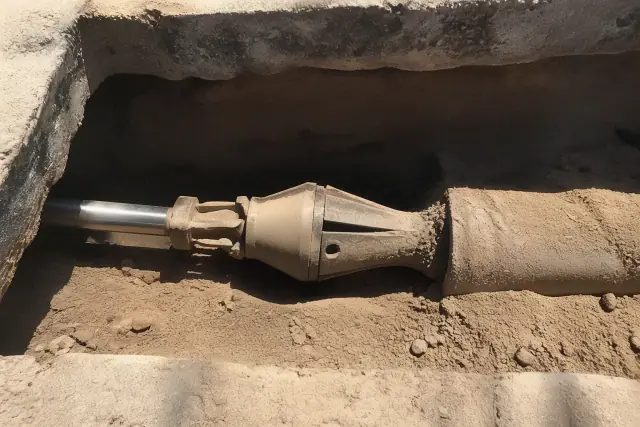
Hydraulic pipe bursting head in an open entry pit during a sewer line replacement in Phoenix, AZ.

HDPE Pipe Bursting

Pipe bursting replaces the old line along its existing route. A bursting head opens the path while new HDPE pipe is pulled into place between access pits.

  • Designed for collapsed or badly fractured pipe
  • Can replace a severely undersized line
  • Fractures and displaces the original pipe outward
  • Requires entry and exit access pits
  • Preserves more yard and hardscape than continuous trenching
Request Estimate
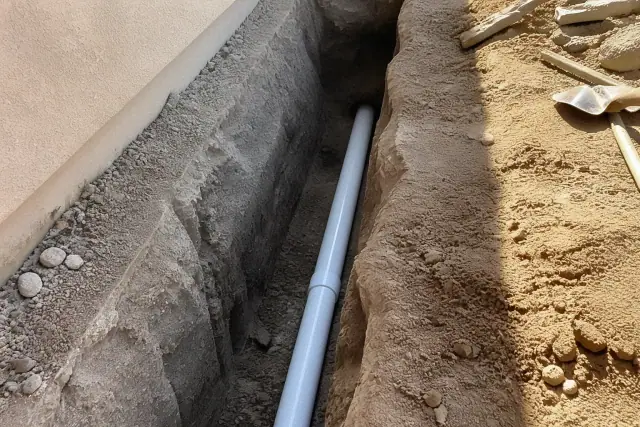
Open-trench sewer line replacement showing a new pipe installed in compacted desert soil in Phoenix, AZ.

Open-Trench Replacement

Traditional excavation remains necessary when a pipe is fully collapsed, has an unsuitable grade, or shares space with utilities that limit trenchless work. Crews expose the required sections, remove failed material, and install the new line on prepared bedding.

  • Works where trenchless access or bend radius is unsuitable
  • Allows correction of pipe grade and alignment
  • Removes failed clay or cast iron material
  • Uses proper bedding before backfill
  • Accounts separately for landscaping, concrete, or driveway restoration
Request Estimate
New sewer pipe section being installed in a residential trench in Phoenix, AZ.

Residential Sewer Laterals

Residential work covers the private line from the cleanout to the City connection. Older Phoenix properties may need careful planning around pools, mature trees, desert landscaping, driveways, and original hardscape.

  • Video inspection before choosing a repair method
  • Planning for mature roots and shifting soil
  • Trenchless options for suitable host pipe and access
  • PVC replacement rated to ASTM D3034 where applicable
  • Cleanout placement for future maintenance access
Request Estimate
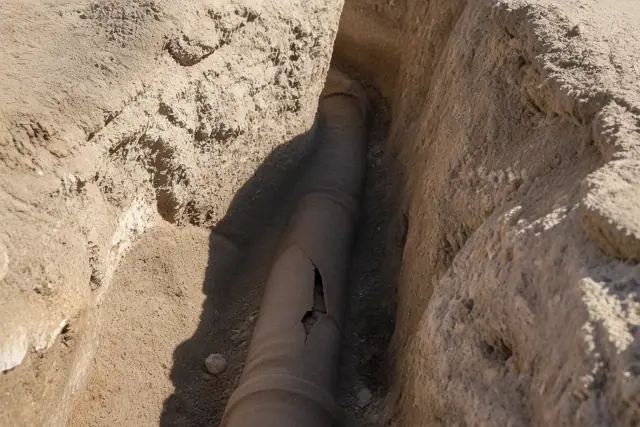
Deep trench revealing cracked terra cotta sewer pipe during a residential excavation project in Phoenix, AZ.

Commercial Sewer Main Services

Commercial sewer work includes main line installation and replacement for retail centers, multi-family apartment buildings, and industrial sites across the Phoenix metro. Camera diagnostics identify the responsible lateral or shared line before work begins.

  • New lines sized to the property's flow demands
  • Diagnosis of shared mains serving multiple units
  • Camera-first planning during urgent disruptions
  • Coordination with City of Phoenix commercial permitting
  • Service for kitchens, laundries, restrooms, and tenant facilities
Request Estimate
Match the Method to the Pipe

Choosing the Right Replacement Approach

A single cracked joint in otherwise sound pipe may need only a localized repair or short liner, while multiple root entries, visible bellying, moderate-to-severe corrosion, or repeated failures can justify full replacement. A $600 spot repair on a line failing in four other places may only delay a larger bill for six months. Camera footage, material, depth, bend radius, grade, and access points guide the decision so the work addresses the complete problem.

Camera-Verified Recommendations

Every repair plan starts with video sewer inspection rather than assumptions about an underground line. You can see the corrosion, roots, separation, or collapse that supports the recommended method before excavation begins.

Phoenix Soil and Pipe Knowledge

Caliche, expansive clay, monsoon moisture swings, and thirsty tree roots create specific stresses on Phoenix sewer laterals. The plan accounts for those conditions along with the behavior of older clay, cast iron, PVC, and HDPE pipe.

Permitting and Final Documentation

Excavation and lateral tie-ins are coordinated with City of Phoenix Water Services permitting requirements. Where permits require inspection, completed work is documented, flow is camera-verified, and final footage is provided for the property record.

What Sets the Work Apart

Why Phoenix Property Owners Choose Us

Phoenix Sewers bases repair decisions on recorded pipe condition and provides a detailed written estimate before work begins. The estimate breaks out camera inspection, excavation or trenchless work, materials, and permitting so the scope and method are clear.

Request Camera Inspection

Backups Across Multiple Fixtures

A backup in three fixtures at once, especially when the lowest fixtures are affected first, points toward a main line restriction or collapse rather than a single branch drain. Repeat backups after drain cleaning call for a camera inspection of the full lateral.

Tree Root Intrusion

Mesquite, palo verde, and citrus roots seek moisture escaping from cracked clay or cast iron joints. Once roots enter, they catch debris, widen openings, and create recurring blockages that can affect several points along the line.

Cast Iron Corrosion

Cast iron commonly reaches 50 to 75 years before corrosion perforates the pipe wall, and many Phoenix lines date to the 1950s and 1960s. Homes built before the 1970s may still rely on original laterals that need camera evaluation for wall loss and widespread weakness.

Shifted or Bellied Pipe

Expansive clay and caliche respond to monsoon moisture changes by moving around buried pipe. That movement can offset joints, open root-entry gaps, or create a belly that holds wastewater instead of maintaining gravity flow.

Sewage Odor or Soggy Soil

A raw sewage smell near the cleanout, an unexplained wet patch above the lateral, or foundation cracking beside soggy soil can indicate a broken sewer line. These symptoms call for location-specific camera work rather than repeated clog clearing.

Collapsed or Widespread Damage

A complete collapse, root intrusion at several points, repeated repair history, or more than 25 percent pipe wall loss from corrosion can make full replacement more cost-effective than another patch. The final choice still depends on the complete camera record and site access.

How the Work Proceeds

Our Sewer Line Replacement Process

Each job moves from diagnosis and utility coordination to method selection, installation, and documented testing. The sequence protects against blind excavation and gives the property owner a clear record of what was found and installed.

01.

Inspect and Locate the Damage

A self-leveling sewer camera records material, diameter, joint condition, depth markers, and the exact location of roots, breaks, corrosion, or bellying. These findings establish the repair coordinates and scope.

02.

Coordinate Utility Locates and Permits

Arizona 811 utility locates are requested before excavation. Work crossing public easements or requiring City review is coordinated with the applicable City of Phoenix right-of-way and Water Services permitting requirements.

03.

Select the Repair Method

Camera findings are compared with pipe material, depth, grade, bend radius, and access. The resulting plan may call for a localized repair, CIPP lining, HDPE pipe bursting, or open-trench replacement.

04.

Prepare Trench or Access Pits

Open-trench work exposes only the sections requiring removal, while lining or bursting generally uses small entry and exit pits. Surrounding landscaping and hardscape are protected wherever the selected method allows.

05.

Install the New Sewer Line

PVC sewer line is placed on code-appropriate bedding and typically set at a quarter-inch fall per foot for gravity drainage. Joints are solvent-welded or gasketed to applicable ASTM specifications, and cleanouts are added or relocated when needed.

06.

Test, Inspect, and Document

Before backfill, water testing and a final camera pass verify flow and slope. Completed work is documented for City inspection where permits require it, and the final footage is provided as a record of the installed line.

Plan the Right Repair

Request a Sewer Line Inspection

Start with a camera-based assessment of the pipe's condition, depth, material, and access. Phoenix Sewers will use those findings to prepare a written estimate for the repair, trenchless method, or full replacement that fits the line.

Straight Answers

Phoenix Sewer Line Replacement FAQs

These answers cover Phoenix replacement costs, warning signs, trenchless methods, ownership, excavation planning, and preventive cleaning. A camera inspection is still required to determine the condition and suitable method for a specific line.

Call Phoenix Sewers

Phoenix-area sewer line replacement typically runs $45 to $280 per linear foot installed, and most homeowners spend $1,800 to $6,500; the stated average is around $4,100. Typical residential trenchless lining or bursting projects generally range from $3,500 to $12,000. More complex equipment-intensive work can reach $80 to $250 per linear foot, while landscaping, concrete, or driveway restoration may be separate. A written estimate after camera inspection prices the actual condition, depth, length, and method.

Slow drainage across several fixtures, gurgling toilets, sewage odor, recurring backups after cleaning, and soggy soil over the lateral are common warnings. Foundation cracks near that wet area can also point to a broken pipe. Camera footage is needed to determine whether the cause is a clog, isolated break, separated joint, corrosion, belly, or collapse.

An isolated cracked joint or root entry point in otherwise sound pipe may qualify for a localized repair or short lining section. Replacement becomes more practical when damage is widespread, repeated repairs have failed, the material is near the end of its service life, or camera footage shows more than 25 percent pipe wall loss from corrosion.

Pipe lining and pipe bursting avoid a continuous trench by working through limited access points. Open-trench replacement is still needed when a pipe has collapsed completely, the grade must be corrected, trenchless bend radius or access is unsuitable, or nearby utilities constrain the work.

CIPP places a resin-saturated felt tube inside the existing damaged line and cures it against the host pipe wall. It works best for clay or cast iron with corrosion or hairline cracks but enough remaining structure to support a liner, and it can restore service life for several decades.

A bursting head fractures and displaces the old pipe while pulling new HDPE pipe through the existing route. This method is considered for collapsed, severely fractured, or undersized pipe and normally requires entry and exit access pits instead of a continuous trench.

PVC sewer line replacement completed to current code often provides 50 or more years of service. Actual performance still depends on installation, grade, bedding, joints, soil movement, and future maintenance.

Minimally invasive work often finishes faster than open trenching, and a residential lateral may be completed in a single day. Pipe condition, access, length, depth, permitting, and the selected method can all change the schedule.

The property owner is responsible for the private lateral from the home's cleanout to its connection with the City of Phoenix main, while the City owns and maintains the main line. Phoenix Water Services maintains records of main locations that can help with planning.

The line is camera-inspected and accurately located before digging. Arizona 811 utility locates are requested, and work involving public easements or regulated tie-ins is coordinated with City of Phoenix permitting and inspection requirements.

Many laterals in the older core are 4-inch clay or cast iron pipe installed 4 to 8 feet deep. Newer construction uses PVC sewer line rated to ASTM D3034 standards, but camera inspection and depth markers are used to document the actual property.

Hydro jetting delivers a pressurized water stream, typically 3,000 to 4,000 psi, to scour grease, sludge, and root intrusion from the full pipe diameter. It can clear buildup and improve camera visibility, but it does not replace structurally failed pipe.

Properties with a history of root intrusion are generally candidates for main line cleaning every 18 to 24 months. Periodic jetting and camera checks can catch developing cracks and buildup before they become recurring backups.