Proudly serving Phoenix, Glendale, Scottsdale, Tempe, Mesa, Chandler & surrounding areasCall or Text 24/7: 480-259-3923
Aerial view of residential neighborhoods with desert landscaping and Saguaro cacti in Phoenix, AZ at golden hour.

Sewer Line Repair in Phoenix, AZ for Cracked, Collapsed & Root-Invaded Pipes

Phoenix Sewers provides sewer line repair in Phoenix, Arizona, for cracked, separated, blocked, and deteriorated underground lines. Our crews handle sewer line replacement, drain cleaning, camera inspection, hydro jetting, trenchless repair, pipe lining, and pipe bursting. Residential and commercial work is matched to the pipe material, depth, access, and actual damage found underground.

Phoenix's caliche, monsoon-driven ground movement, triple-digit heat, and moisture-seeking mesquite and eucalyptus roots can stress aging clay, Orangeburg, and cast iron pipe. A PACP-standard camera inspection shows whether the trouble is isolated or spread across the run. That evidence lets us recommend a targeted repair, cleaning, relining, bursting, or open replacement without pricing from guesswork.

When pipe condition allows, trenchless methods protect driveways, pool decking, pavers, irrigation, and established landscaping. Replacement work uses ASTM D3034 SDR-35 or Schedule 40 PVC according to depth and load requirements, with City of Phoenix permitting coordinated when the repair connects to the municipal main.

Phoenix Sewers provides sewer line repair throughout Phoenix and the greater Salt River Valley, including Scottsdale, Tempe, Mesa, Glendale, and Chandler.

★ ★ ★ ★ ★4.9/5 Average Rating · 20+ Years of Experience · Thousands of Customers Helped · Licensed & Insured · Residential & Commercial

Phoenix Sewer Line Repair Options & Benefits

What Does Sewer Line Repair Include?

Sewer line repair begins by feeding a waterproof, high-resolution camera through a cleanout and recording the line from end to end. Distance tracking locates cracks, offset joints, bellies, root masses, and collapsed areas relative to the yard or foundation.

A sound line with one damaged joint may need only a spot repair or targeted lining. Widespread deterioration may call for CIPP relining, pipe bursting, or open excavation, while a structurally sound but blocked line may be restored with drain cleaning or hydro jetting.

For replacement, the repair plan accounts for soil, line depth, load, obstacles, and the municipal connection. New pipe is installed to Uniform Plumbing Code specifications, tested before backfilling, and paired with surface restoration when excavation is required.

Benefits of a Condition-Based Repair Plan

Matching the work to camera evidence helps preserve sound pipe, avoid unnecessary digging, and put the budget toward the failure that is actually present.

  • Pinpoints underground damage before excavation
  • Separates isolated defects from line-wide deterioration
  • Protects landscaping and hardscape when trenchless work fits
  • Verifies pipe material, joint condition, and blockage type
  • Creates a continuous, joint-free interior with CIPP lining
  • Cleans the full pipe wall when hydro jetting is appropriate
  • Documents commercial scope for ownership or management
  • Coordinates applicable City permits and inspections
Phoenix Sewer Services

Sewer Line Repair Services

From diagnosis and cleaning to structural rehabilitation and full replacement, each service answers a different pipe condition. Camera findings guide which option belongs in the scope.

Sewer Camera Inspection

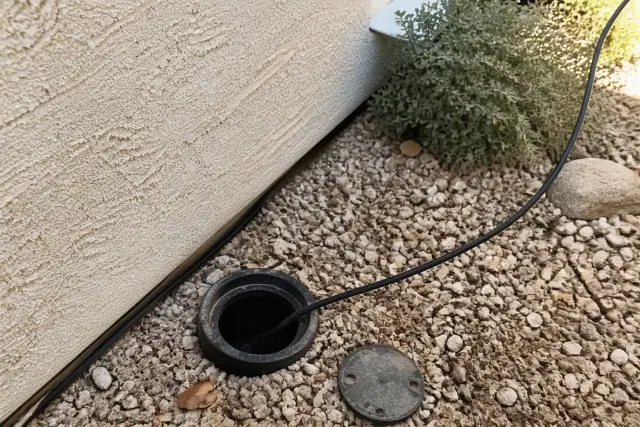
Sewer camera probe cable entering a pipe cleanout at a jobsite in Phoenix, AZ.

A PACP-standard video inspection records the full line, tracks defect locations, and identifies pipe material, joint condition, root intrusion, cracks, bellies, and blockages. It replaces guesswork with footage that can support an accurate repair estimate.

Request Estimate

Trenchless Sewer Repair

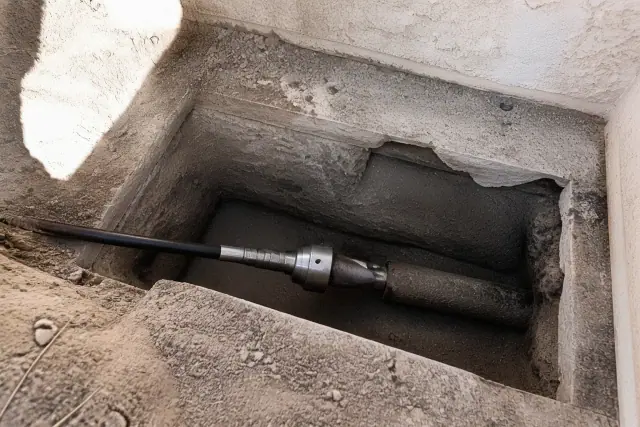
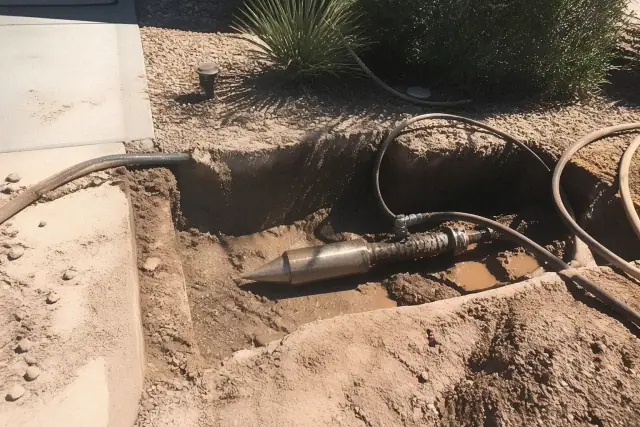
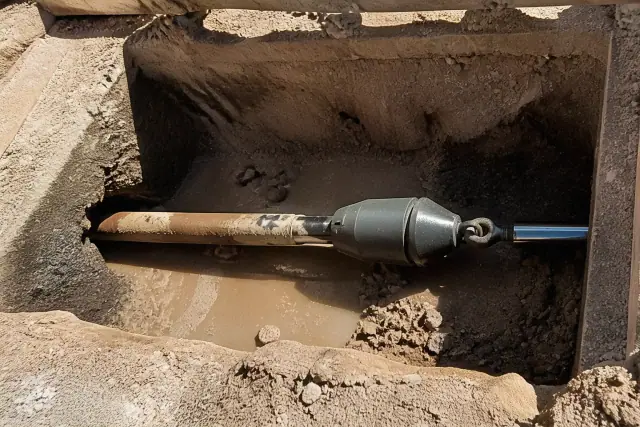
Hydraulic bursting head inside a pipe repair entry pit at a jobsite in Phoenix, AZ.

Trenchless repair rehabilitates or replaces a line through compact access points instead of opening a continuous trench. It is well suited to aligned pipe with cracks, root intrusion, or minor offsets beneath landscaping, pavers, pool decking, or driveways.

Request Estimate

Sewer Line Replacement

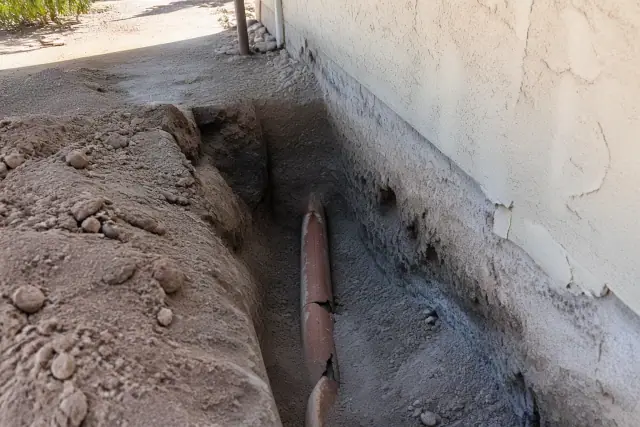
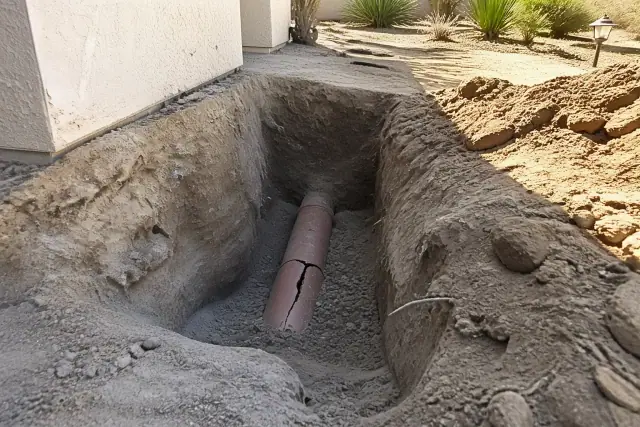
Deep trench showing a sewer pipe replacement at a construction site in Phoenix, AZ.

Replacement becomes the durable choice when clay or Orangeburg has deteriorated broadly, cast iron has corroded through in several areas, or the camera reveals multiple collapsed sections. The route may use bursting or excavation depending on alignment, soil, depth, access, and what lies above the line.

Request Estimate

CIPP Sewer Pipe Lining

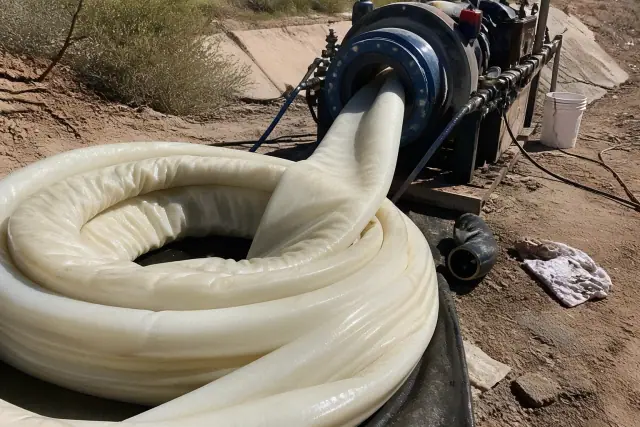
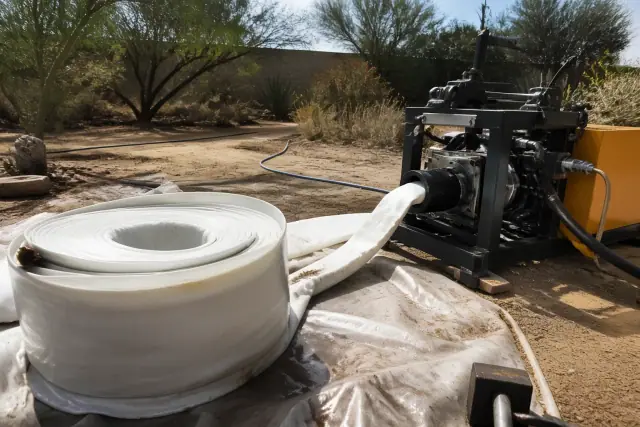
Resin-coated liner being prepared for CIPP sewer pipe repair in Phoenix, AZ.

Cured-in-place pipe lining presses a resin-saturated felt liner against the cleaned interior of an aligned host pipe. The resin typically cures within a few hours into a continuous epoxy surface, and a typical residential relining job can be completed in a single day instead of the several days open trenching may require.

Request Estimate

Sewer Pipe Bursting

Hydraulic bursting head in a trenchless pipe repair pit during a sewer line project in Phoenix, AZ.

Pipe bursting fractures a deteriorated line outward while pulling new HDPE or PVC pipe into the same path. It can replace a full run without a continuous trench, including Phoenix installations at depths of six to ten feet when site conditions support the method.

Request Estimate

Hydro Jetting and Main Line Cleaning

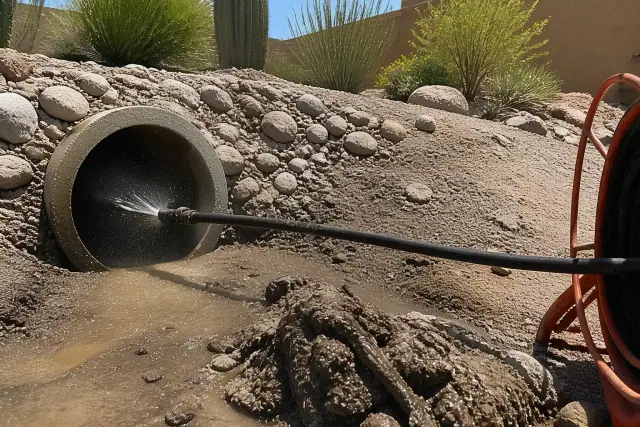
Hydro jetting equipment cleaning a sewer line at a residential worksite in Phoenix, AZ.

Hydro jetting sends water through a specialized nozzle at pressures up to 4,000 PSI to scour grease, mineral scale, and root intrusion from the full pipe wall. A follow-up camera pass confirms whether the line is fully clear and whether structural repair is also needed.

Request Estimate
Repair Method Details

Repair Methods by Pipe Condition

The right repair is defined by alignment, material, structural condition, depth, access, and the surface above the line. These are the practical conditions that steer the recommendation after inspection.

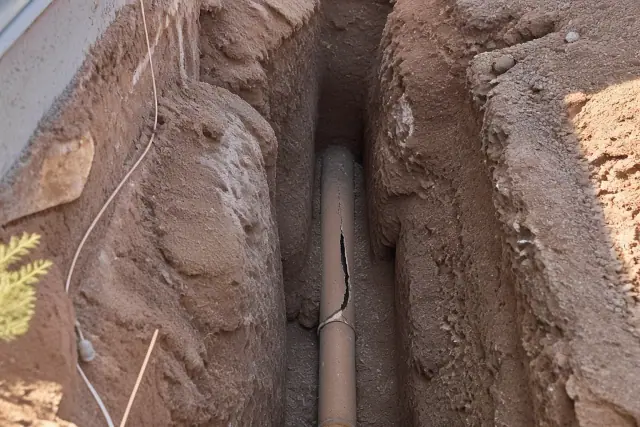
Excavated trench showing a cracked terra cotta sewer pipe during a targeted spot repair in Phoenix, AZ.

Targeted Spot Repair

A localized repair can correct one crack, offset joint, or short damaged section when the rest of the run remains structurally sound.

  • Best for damage isolated on camera
  • Can address a single offset joint
  • Suitable for a hairline crack in otherwise sound pipe
  • May use a small excavation or targeted lining
  • Preserves unaffected sections of the sewer run
Request Estimate
Resin-coated liner and hydraulic inversion machine staged for sewer repair at a jobsite in Phoenix, AZ.

CIPP Relining Candidates

Relining is designed for a host pipe that still follows a sound alignment but has developed cracks, failed joints, or root entry points.

  • Original pipe alignment remains serviceable
  • Cracks or joint failures are visible on camera
  • Root intrusion has entered through seams
  • Pipe wall can be cleaned before liner placement
  • Continuous liner removes the old joint gaps
Request Estimate
Hydraulic bursting head positioned in a trenchless entry pit at a job site in Phoenix, AZ.

Pipe Bursting Candidates

Bursting fits a deteriorated line that needs full replacement but can still provide a usable route for the bursting head and new pipe.

  • Replaces a broadly deteriorated sewer run
  • Pulls new HDPE or PVC behind the bursting head
  • Uses one or two small access pits
  • Avoids excavating the pipe's full length
  • Helps protect established surfaces above the route
Request Estimate
Deep trench revealing a cracked terra cotta sewer pipe in red desert soil at a construction site in Phoenix, AZ.

Traditional Excavation Conditions

Open excavation remains necessary when the existing route cannot support a trenchless method or when direct access is needed to reset the line.

  • Fully collapsed pipe blocks trenchless access
  • A persistent belly requires slope correction
  • Severe misalignment changes the original route
  • Foundation, depth, or access affects equipment planning
  • Landscaping and hardscape restoration enter the scope
Request Estimate
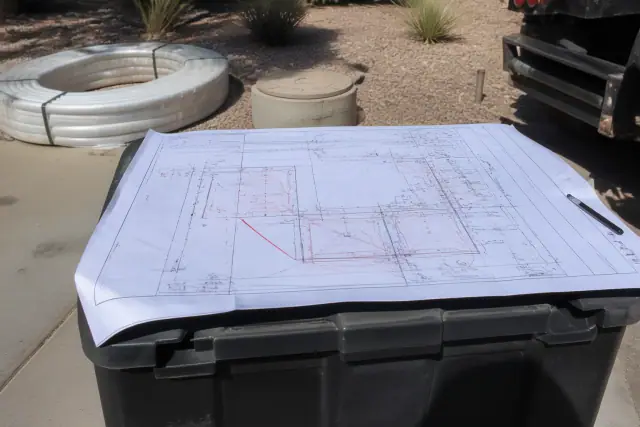
Commercial sewer repair site layout map with pipe markings on a tool crate in Phoenix, AZ.

Commercial Sewer Planning

Restaurants, medical facilities, and multi-tenant buildings bring higher wastewater volume, different debris, and tighter operating constraints than residential lines.

  • Grease and food waste shape cleaning needs
  • Larger-diameter jetting equipment may be specified
  • Main line cleaning may follow a more frequent schedule
  • After-hours access can be included in the estimate
  • Municipal tie-ins require inspector coordination
Request Estimate
Finding the Right Fit

Choosing the Right Sewer Repair Approach

A repair recommendation should connect the recorded defect to a method that can correct it without creating unnecessary property damage. Inspection evidence, site conditions, and code requirements keep that decision grounded.

PACP-Standard Camera Inspection

Recorded footage establishes the defect type and location before the estimate is built. That makes it possible to distinguish a blockage from structural failure and a spot defect from line-wide damage.

Method Matched to Pipe Condition

Aligned pipe with cracks may be relined, a deteriorated route may be burst and replaced, and collapsed or severely misaligned pipe may need excavation. Structurally compromised pipe is not hydro jetted simply because it is blocked.

Property-Conscious Repair Planning

Driveways, pool equipment, pavers, Bermuda or desert landscaping, irrigation lines, and mature trees all affect access planning. Where the pipe condition permits, a trenchless route reduces disruption to those established surfaces.

What Sets Us Apart

Why Choose Phoenix Sewers for Sewer Line Repair?

Phoenix Sewers holds its license through the Arizona Registrar of Contractors, uses camera evidence to scope the work, and coordinates applicable permits with the City of Phoenix Water Services Department. Replacement materials are selected for depth and load requirements, and the repaired line is tested before backfilling or surface restoration.

Request an Inspection

Cracked or Separated Pipe

Caliche-driven ground shift after monsoon downpours and prolonged desert heat can crack rigid sewer pipe or pull joints apart. A camera shows whether the defect is isolated enough for repair or part of a broader failure.

Root Intrusion

Mesquite, eucalyptus, and other mature trees seek moisture in Phoenix's dry soil, allowing roots to enter cracks and aging pipe joints. Cleaning removes the mass, while lining or another structural repair addresses the opening that let roots in.

Recurring Sewer Backups

A line that backs up again after cleaning may have a low spot, repeated root entry, multiple collapses, or deterioration that a snake cannot correct. Inspection after clearing reveals whether flow was restored temporarily or the underlying cause was resolved.

Bellied or Misaligned Line

A sagging belly holds wastewater and debris, while severe misalignment disrupts the route and slope needed for drainage. Because lining follows the existing shape, these conditions often require excavation instead of a liner.

Aging Pipe Materials

Clay and Orangeburg from older central Phoenix construction can deteriorate across the run, while unlined cast iron may corrode through in multiple spots. Widespread material failure makes repeated spot repairs less durable than one properly scoped replacement.

Grease and Mineral Buildup

Grease-heavy commercial waste and mineral scale associated with Phoenix's hard water can narrow the usable pipe diameter. Hydro jetting scours those deposits when camera inspection confirms the pipe is structurally able to handle high pressure.

How it works

Our Sewer Line Repair Process

Each project moves from recorded diagnosis to method selection, permitting when needed, repair, and final testing. The sequence keeps the scope tied to underground evidence and site conditions.

01.

Inspect and Record the Line

We send a camera through an accessible cleanout, record the full run, and track distance so defects can be located relative to the property.

02.

Assess Damage and Site Conditions

The footage is reviewed alongside pipe material, alignment, depth, soil, access, and obstacles such as concrete, mature trees, landscaping, or a foundation.

03.

Compare Repair and Replacement Options

We match the findings to spot repair, cleaning, relining, bursting, or excavation and explain when repair would be only a short-term answer. Commercial ownership or property management receives a written scope after inspection.

04.

Coordinate the Required Permit

When work ties into the municipal main, we coordinate the required permit and inspections with the City of Phoenix Water Services Department before completing the connection.

05.

Repair, Clean, or Replace the Pipe

The selected method is carried out through the available cleanout, compact trenchless access points, or an open excavation, with replacement materials chosen for the line's depth and load.

06.

Test the Line and Restore the Surface

We test the repaired or replacement line before backfilling and confirm the result with camera inspection when it is part of the method. Excavated surfaces then move into the restoration included in the scope.

Get Clear Answers

Schedule a Sewer Line
Repair
Consultation

Request an inspection-based estimate for a recurring backup, cracked pipe, root intrusion, failed sewer line, or commercial main line concern in Phoenix.

Sewer Repair Help

Sewer Line Repair FAQs

These answers explain common Phoenix sewer repair costs, methods, inspection findings, timelines, and site considerations. A camera inspection is still needed to determine what applies to a specific line.

Call Our Experts

Traditional excavation typically runs $50 to $250 per linear foot for equipment and labor, with many jobs totaling $4,000 to $13,000 and projects involving digging, pipe location, and surface restoration reaching $12,000 to $25,000. Trenchless methods generally run $80 to $250 per foot, while full trenchless replacement jobs commonly average $6,000 to $12,000 for the property overall. Residential relining or bursting work often falls between $3,500 and $8,500. Depth, length, access, pipe material, and restoration needs determine the actual estimate.

A standalone video sewer inspection in Phoenix typically costs a few hundred dollars, depending on line length and access. It is frequently credited toward the job when the customer proceeds with repair work. The inspection locates defects and shows pipe condition before the repair scope is priced.

An isolated crack, offset joint, or short damaged section in an otherwise sound line may be suitable for spot repair or targeted lining. Replacement becomes more appropriate when deterioration or collapse appears in multiple places across the run. Camera footage is used to make that distinction.

Trenchless repair uses an existing cleanout or compact access excavations rather than opening the full sewer route. CIPP lining creates a new interior surface inside the old pipe, while pipe bursting fractures the old line and pulls new pipe into place. The pipe's alignment and structural condition determine whether either method fits.

The resin in a CIPP liner typically cures within a few hours. A typical residential relining project can be completed in a single day, compared with several days for open trenching. Access, cleaning needs, line length, and pipe condition can affect the schedule.

A mechanical snake generally opens a path through a clog. Hydro jetting uses high-pressure water to scour grease, mineral scale, roots, and debris from the full interior pipe wall. A camera inspection can confirm whether the line is clear afterward.

No. High pressure can worsen a crack in pipe that is already structurally compromised. Camera inspection should establish the material and condition before hydro jetting is selected.

Recurring backups after cleaning, several collapsed areas on camera, persistent bellies that clog again, and broad deterioration in Orangeburg, clay, or unlined cast iron can point toward replacement. The key question is whether damage is isolated or distributed across the run.

Often, yes, when camera inspection shows the alignment and condition can support trenchless work. Lining or bursting may avoid a continuous trench beneath a driveway, pavers, pool decking, irrigation, or mature landscaping. A collapse, severe misalignment, or belly may still require excavation.

Replacement work may use ASTM D3034 SDR-35 or Schedule 40 PVC according to depth and load requirements. Pipe bursting may pull new HDPE or PVC into the old route. The selected material must fit the installation conditions and applicable Uniform Plumbing Code specifications.

Work that ties into the municipal main requires coordination with the City of Phoenix Water Services Department. Phoenix Sewers coordinates the applicable permit and inspection steps for that connection. The exact requirements depend on the repair scope.

Commercial estimates account for pipe diameter, material, depth, access, wastewater volume, and whether work can occur after hours. Restaurants, medical facilities, and multi-tenant buildings may need larger-diameter jetting equipment or more frequent main line cleaning. A written scope after camera inspection gives ownership or property management documentation for planning.

Sewer line repair involves buried utility location, correct drainage slope, compatible pipe fittings, specialized equipment, and Uniform Plumbing Code requirements. An incorrect slope or connection can create a larger failure. Professional diagnosis and installation reduce that risk.