Sewer Line Repair
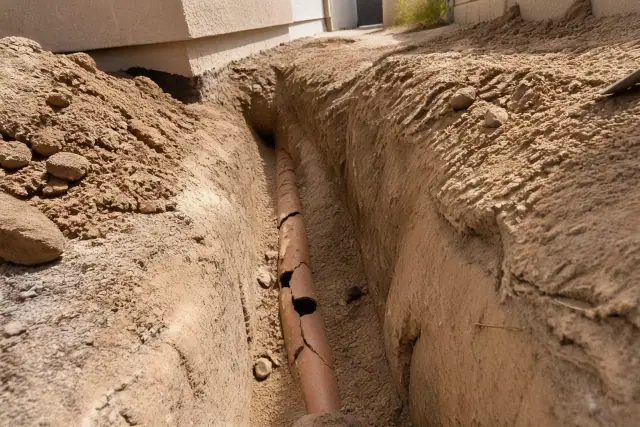
Camera equipment isolates cracked joints, root intrusion, offsets, and bellied sections so the repair can match the failure point, pipe material, and depth without unnecessary excavation.
Explore Service
Phoenix Sewers provides sewer line repair, sewer line replacement, and drain cleaning for homes and businesses in Avondale, Arizona. Our team also handles sewer camera inspections, hydro jetting, main line cleaning, trenchless repair, pipe lining, pipe bursting, and commercial sewer work. We are a family-owned, licensed, and insured sewer repair company familiar with the clay and caliche conditions beneath local streets and slabs. From slow drains to damaged laterals, we diagnose the cause before recommending the repair.
Avondale's expansive desert clay swells during monsoon downpours and shrinks through dry spells, placing repeated stress on buried pipe joints. Older clay, Orangeburg, and cast-iron lines can develop cracks, offsets, root intrusion, or bellied sections as the ground moves. A camera inspection shows the exact failure point and pipe material before digging begins. That evidence helps us recommend a targeted repair instead of masking the problem for a few months.
We serve Garden Lakes, Rancho Santa Fe, Coldwater Springs, Alamar, the Avondale Boulevard and Van Buren Street corridor, and properties near Phoenix Raceway. Avondale grew from 35,883 residents in 2000 to 89,334 in the 2020 census, creating a mix of older residential laterals and newer commercial sewer systems with different repair needs.
Choose repair, replacement, cleaning, inspection, or trenchless service based on the condition of your line and the access available on the property. Phoenix Sewers also serves nearby Goodyear, AZ , along with Litchfield Park, Tolleson, Buckeye, and West Phoenix neighborhoods bordering Avondale.
Camera equipment isolates cracked joints, root intrusion, offsets, and bellied sections so the repair can match the failure point, pipe material, and depth without unnecessary excavation.
Explore Service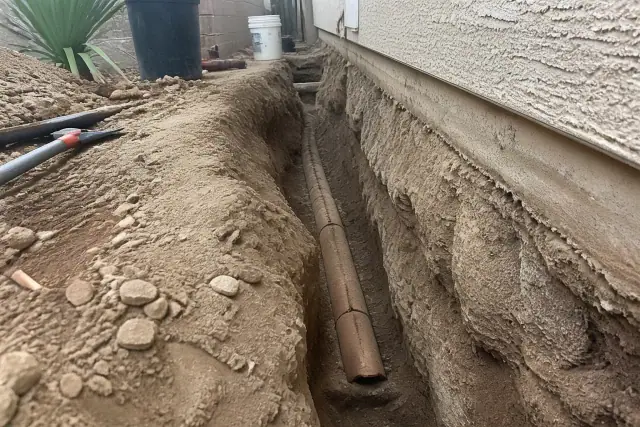
Lines with multiple failures or an expired service life may need full replacement. We evaluate older clay, Orangeburg, and cast iron before recommending PVC or HDPE pipe suited to expansive soil.
Explore Service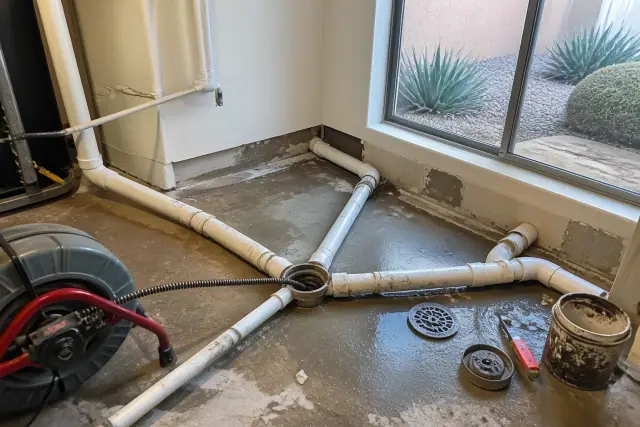
Motorized cabling or hydro jetting clears grease, hard-water mineral buildup, and root hair intrusion. Drain cleaning can address an active clog or support routine maintenance before flow stops completely.
Explore Service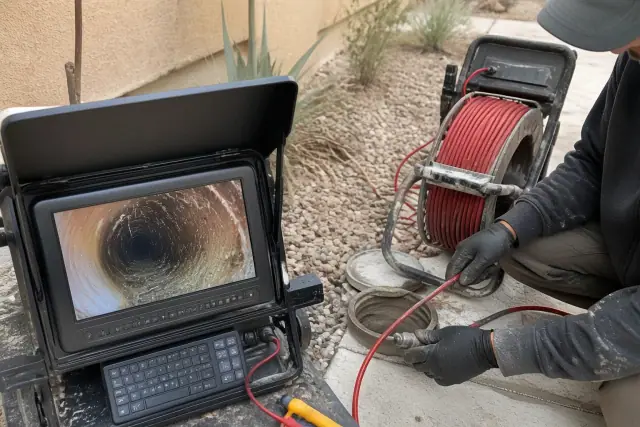
Video inspection reveals root intrusion, bellies, offset joints, and pipe material without breaking ground. Camera footage also provides documented evidence for repair estimates and pre-purchase home inspections.
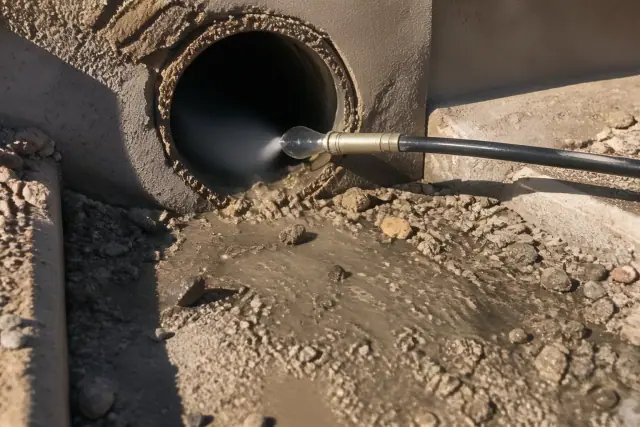
High-pressure water, typically 3,000 to 4,000 psi, strips grease, scale, sand, and root mass from the pipe wall. It can restore more of the line's original diameter than cabling alone.
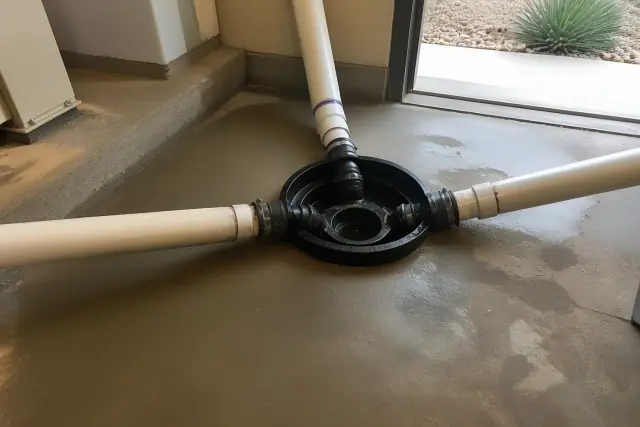
Main line cleaning clears the primary lateral between a property and the municipal system. Periodic cleaning can help older homes with mature trees manage recurring root intrusion into clay or Orangeburg pipe.
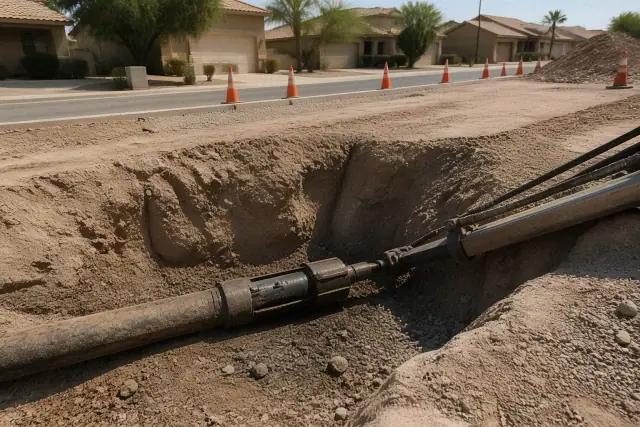
Pipe lining and pipe bursting use small access pits instead of a full trench. These methods can preserve landscaping, hardscape, and driveways while addressing eligible damaged lines.
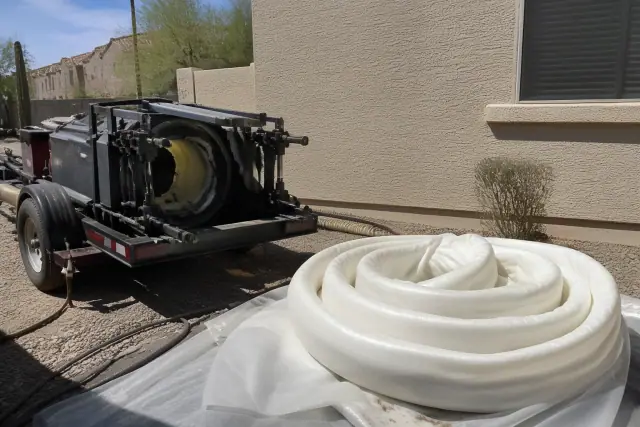
A resin-saturated liner cures inside an existing pipe to form a jointless pipe within a pipe. Lining suits multiple cracks or minor root intrusion when the host line remains structurally sound.
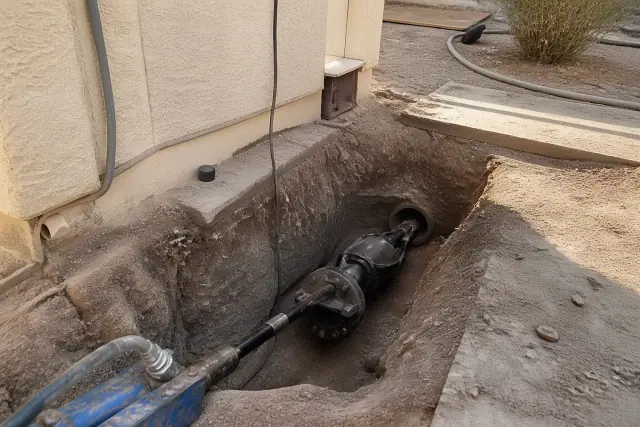
A bursting head fractures the damaged pipe outward while pulling a new HDPE line through its path. This method can replace fully collapsed or severely undersized lines that lining cannot repair.
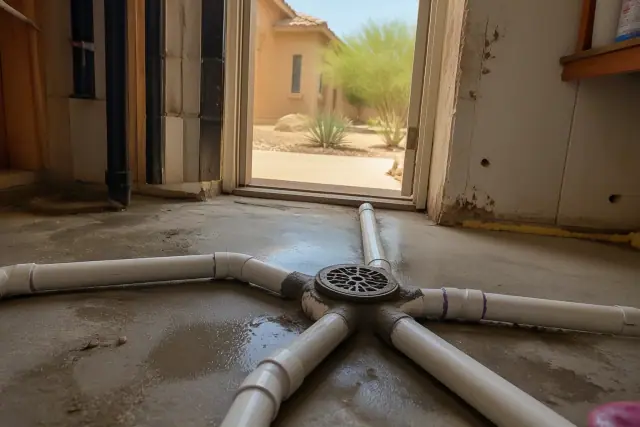
Restaurants, retail centers, HOAs, and industrial properties can schedule grease-line maintenance, main-line cleaning, and camera-verified inspection documentation around operating hours when possible.
The right option depends on camera evidence, pipe material, depth, access, and whether the line has one isolated defect or several failure points. We compare targeted repair, lining, bursting, and full replacement against the complete project impact, including excavation and surface restoration.
We locate the failure and document what is happening inside the line before choosing a repair. The footage distinguishes an isolated crack from roots, a belly, an offset joint, or a broader collapse.
Clay, Orangeburg, and older cast iron fail differently, so material and remaining structure matter. A sound host pipe may accept lining, while a fully collapsed or undersized line may require bursting or replacement.
Shallow residential laterals and deeper municipal tie-ins require different equipment and planning. Caliche, expansive clay, run length, and access around slabs or hardscape also affect the practical repair method.
Lining and bursting can reduce disruption when the line is a suitable candidate. Open-cut work remains appropriate when damage, layout, or access prevents a durable trenchless repair.
The least expensive pipe method is not always the lowest total project cost. We consider excavation, driveway or landscape restoration, access, and the expected durability of the completed repair.
One isolated defect may support a spot repair, while repeated failures or an expired service life can make replacement more cost-effective. We explain the footage and options before the work begins.
Slow drains, gurgling toilets, sewage odors, and recurring backups can point to conditions deeper than a simple fixture clog. Avondale's older pipe materials, mature roots, hard-water buildup, and shifting soil each leave different evidence inside the lateral.
Request InspectionRoots can enter separated joints and small cracks, then catch debris until the line blocks. Clay and Orangeburg laterals near mature trees are especially vulnerable to recurring intrusion.
Expanding and shrinking soil can crack pipe or push joints out of alignment. The offset restricts flow and creates an opening where soil or roots can enter the lateral.
A sagging section holds wastewater and debris instead of maintaining steady fall toward the main. Repeated clogs in the same area can be a sign that cabling alone will not correct the pipe's shape.
Grease and scale from hard water narrow the usable pipe diameter and collect more solids over time. Restaurants and busy homes may need more thorough wall cleaning than a cable can provide.
A fully collapsed line cannot be reopened with cleaning, and a severely undersized line may continue to restrict use. Camera footage helps determine whether pipe bursting or full replacement is appropriate.
Desert clay swells after monsoon rain and contracts during dry summer conditions. That seasonal movement continually stresses buried joints and can worsen cracks already present in older pipe.
Sewer repair should begin with evidence and end with documented flow. Our local experience, before-and-after camera footage, licensing, insurance, and permit coordination give property owners a clearer path from diagnosis through completion.
Our crews recognize patterns caused by expansive clay, caliche, and seasonal ground movement across the West Valley. Misreading a shifting-clay crack as simple root damage can lead to another failure within a year.
Before-and-after camera passes show the original defect and confirm clear flow after repair. Property owners and real estate inspectors receive visual proof instead of relying on guesswork.
Phoenix Sewers is licensed and insured, coordinates permits with the City of Avondale when required, and follows standards consistent with the Arizona Registrar of Contractors and applicable Uniform Plumbing Code requirements.
Every project starts with diagnosis, not assumption. We locate the defect, protect against utility conflicts, select the repair method, verify the completed work, and restore areas disturbed for access.
A video pass locates the exact failure point, traces the private lateral, and identifies the pipe material before any repair plan is prepared.
Before excavation or a trenchless access pit, we coordinate with Arizona 811 so underground utilities are marked as required by state law.
We compare spot repair, lining, bursting, and full replacement against the camera findings, pipe condition, depth, access, and property-restoration needs.
The crew completes the selected work using the planned access. Straightforward repairs may finish in a single day, while excavated replacements can take two to three days depending on length and access.
A final camera pass confirms that the repaired or replaced section is clear and documents the completed condition of the line.
Landscaping or hardscape disturbed for access is restored after the repair. Trenchless work limits this disruption by using small access pits where the pipe qualifies.
Case Study 1: Targeted residential repair: Camera footage can isolate one cracked or offset section so a spot repair avoids opening the entire yard or driveway.
Case Study 2: Lower-disruption trenchless work: Eligible pipe lining or bursting projects can preserve mature landscaping and hardscape while saving 30 to 50 percent compared with dig-and-replace after restoration costs are included.
Case Study 3: Commercial maintenance: Camera-verified cleaning can help restaurants, retail centers, and industrial properties address grease or main-line buildup while work is scheduled around operating hours when possible.
Tell Phoenix Sewers about slow drains, recurring backups, sewage odors, or a known line failure. We can arrange a camera inspection, explain the findings, and prepare an estimate for the repair, cleaning, or replacement your property needs.
These answers cover repair methods, timing, costs, permits, trenchless options, and the local conditions that affect sewer lines in Avondale. A camera inspection is the most reliable way to apply this guidance to a specific property.
Call Our ExpertsMost spot repairs and trenchless lining jobs are completed in a single day after camera inspection. Full replacement with excavation typically takes two to three days, depending on run length, depth, access, and whether crews encounter rock or caliche. Full-backup emergency calls are prioritized and can often be resolved the same day, while longer commercial mains may take more time.
The camera findings determine the repair method. Isolated cracks or separated joints may use spot repair or a cured-in-place resin liner, while fully collapsed or undersized pipe may require bursting with new HDPE. Lines with several failure points may need open-cut or trenchless replacement.
The City of Avondale Public Works Department maintains records for municipal mains that connect to private laterals. Arizona 811 marks underground utilities before digging, as required by state law. A camera sent through the property's cleanout is the most reliable way to trace the private line's route and depth.
Common causes include mature-tree root intrusion, grease buildup, bellied pipe, and joint movement in expansive clay soil. Older clay and Orangeburg lines are particularly prone to joint separation through monsoon and dry-season cycles. Debris collects in damaged or sagging sections until flow slows or stops.
It can be when the existing line is a suitable candidate and the work is installed correctly. Cured-in-place lining creates a jointless, corrosion-resistant interior, while pipe bursting installs a new HDPE pipe rated for decades of service. Proper camera diagnosis matters because not every damaged line can support a trenchless method.
Permit requirements depend on the scope and whether the work stays on the private lateral or connects to the municipal main. Minor private-line spot repairs often do not require a permit, while full replacements typically do. Phoenix Sewers coordinates with the City of Avondale and Maricopa County Environmental Services when a project requires approval.
National data places average repair costs between $1,388 and $5,323, with a typical project around $3,319; residential work in Avondale generally tracks $50 to $250 per linear foot for equipment and labor. A minor spot repair may cost a few hundred dollars, while a full lateral replacement with excavation and restoration can reach $12,000 or more. Length, depth, access, and method determine the estimate, and financing options can be discussed for larger projects.
Hydro jetting uses water at typically 3,000 to 4,000 psi to strip grease, scale, sand, and root mass from the interior pipe wall. It is useful when recurring clogs come from widespread buildup rather than one isolated obstruction. A camera inspection helps determine whether the pipe can safely be jetted.
Slow drains, gurgling toilets, sewage odors, or repeat clogs are practical reasons to inspect the main lateral. Camera footage can identify roots, offsets, bellies, cracks, and pipe material before repair is quoted. It also gives home buyers documented information about the line before purchase.
Replacement is often more cost-effective when a line has several failure points or has exceeded its service life. One isolated crack or separated joint may support a targeted repair, but repeated patching does not correct widespread deterioration. The decision should follow a full camera review of the pipe.
Full replacement generally ranges from $2,000 to $20,000, depending on line length, depth, access, and whether the method is trenchless or open cut. Surface restoration and landscaping can materially affect the total project cost. A camera inspection is needed to define the scope before an estimate is prepared.
Established areas can contain aging clay, Orangeburg, and cast-iron laterals, including residential lines now reaching 40 to 60 years old. Clay and Orangeburg are vulnerable to root intrusion and joint separation, while cast iron can deteriorate with age. Replacement recommendations may include PVC or HDPE based on the site and chosen method.
Pipe lining and bursting use small access pits rather than opening a full trench, so they can preserve mature landscaping, hardscape, and driveways. Property owners typically save 30 to 50 percent compared with traditional dig-and-replace after excavation, restoration, and landscaping costs are included. Eligibility depends on the pipe's structure and the camera findings.
Periodic main sewer line cleaning can help older properties with mature trees manage root intrusion and recurring buildup. The appropriate schedule depends on pipe material, prior blockages, and what camera footage shows. Clay and Orangeburg laterals with a history of roots may need closer monitoring than newer pipe.
Yes. Phoenix Sewers provides grease-line maintenance, main-line cleaning, hydro jetting, and camera-verified inspection documentation for restaurants, retail centers, HOAs, and industrial properties. Work can be scheduled around operating hours when possible, including properties along Avondale Boulevard and near Phoenix Raceway.