What the Findings Mean
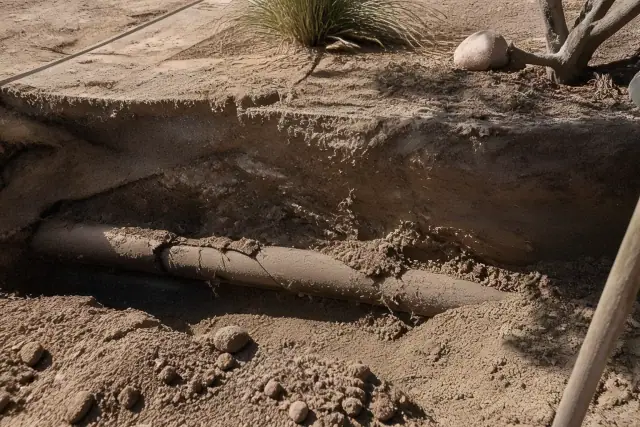
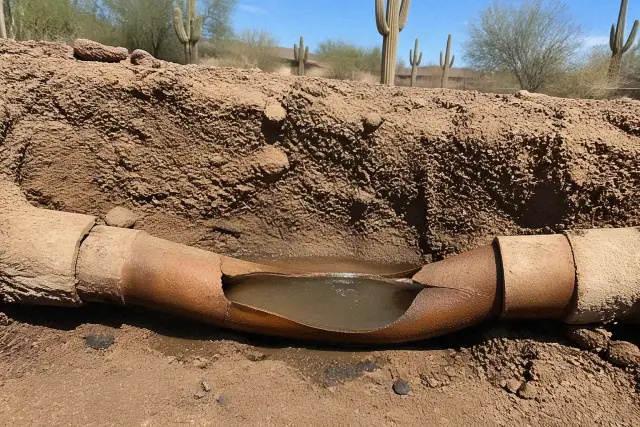
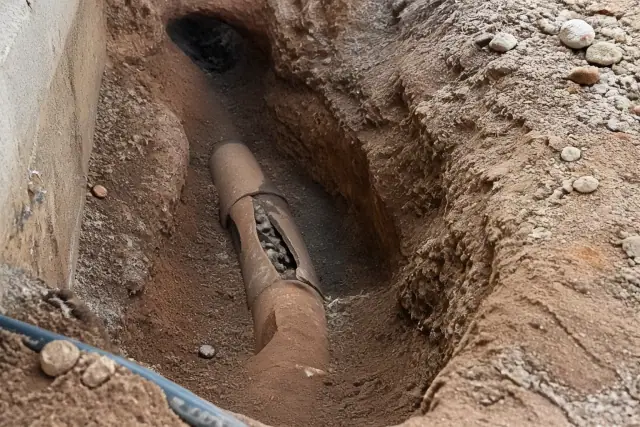
Repair is reasonable when the camera finds one isolated crack, a small root intrusion, or a minor offset that can be lined or spot-repaired. Replacement becomes the more reliable choice when damage appears at multiple points, the pipe is collapsed, a belly repeatedly holds waste, or clay or cast iron has reached the end of its useful condition. The decision should follow camera findings, not symptoms alone.
Factors That Change the Answer
Expansive clay and caliche soil can allow a sewer line to settle into a belly, while monsoon moisture can intensify odor over a leak. In Arcadia and Ahwatukee, mature landscaping over decades-old pipe can make a greener, spongy patch an early warning; citrus and eucalyptus near older Phoenix lines are recurring root-intrusion risks. Clay lines near downtown and Coronado may date from before 1980, so access, exact depth, material, and whether the line can be lined, burst, or must be excavated all affect the recommendation.
Common Follow-Up Questions
Can a 50-year-old sewer line stay in service? Yes, if a camera shows sound walls and aligned joints; age alone does not prove failure. Can hydro jetting solve recurring backups? It can restore flow temporarily, but it cannot repair a belly, offset, crack, or collapse. When should you schedule a scope? After two or more backups in a year, before buying a home with original plumbing, or before major landscaping. Do trenchless methods avoid all digging? They typically cost less and disturb less landscaping than an open trench, but access and camera findings determine whether pipe bursting or excavation fits.