Mechanical Snaking
A motorized auger rotates a cable through the cleanout to break apart or retrieve an isolated root, paper, or wipe blockage, then the line is flushed to confirm flow.
At Phoenix Sewers, main sewer line cleaning starts with a video inspection to identify the blockage and pipe condition. A motorized auger handles many isolated clogs, while hydro jetting scours grease, scale, sludge, and roots from the full pipe wall. That choice matters in Phoenix, where caliche soil, mesquite and palo verde roots, and aging clay laterals can produce very different problems.
A motorized auger rotates a cable through the cleanout to break apart or retrieve an isolated root, paper, or wipe blockage, then the line is flushed to confirm flow.
A self-pulling nozzle sprays water forward and backward at several thousand PSI, removing grease, sludge, scale, and root intrusion across the pipe's full diameter.
A waterproof, self-lit camera identifies roots, cracks, bellies, offset joints, and pipe material before cleaning, then a follow-up pass verifies that flow is restored.
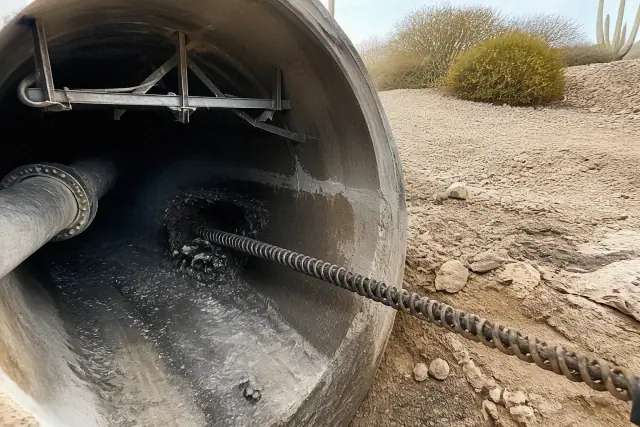
The rotating cable entering through a cleanout and opening a path through a localized mass of roots, paper, or wipes.
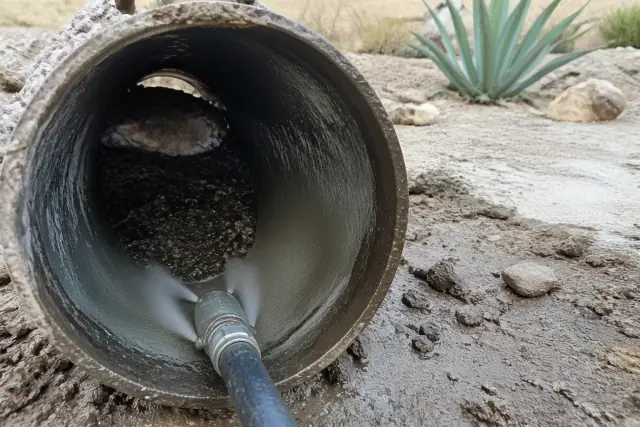
Forward and backward water jets stripping grease and scale from the entire interior rather than cutting only a narrow channel.
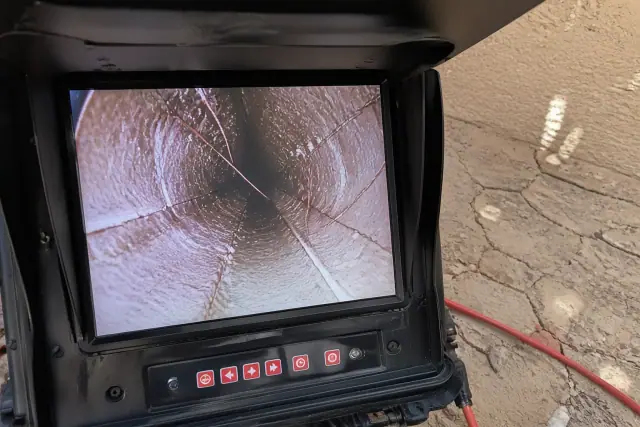
A live sewer-camera view that distinguishes a removable blockage from a belly, broken joint, or other structural defect.
Use a motorized auger for a fast, isolated clog when the camera does not show wall-to-wall buildup or structural damage.
Use hydro jetting for recurring backups or confirmed grease, scale, and root buildup that coats the line and reduces its flow capacity.
If the camera finds a collapsed, bellied, or root-shattered section, cleaning alone will not solve it; lining, bursting, or replacement may need evaluation.
Caustic cleaners can degrade older pipe joints and rarely clear root masses or heavy grease; enzymatic treatments are gentler but too slow for an active blockage.
| Finding | Likely Method | Why It Fits |
|---|---|---|
| One isolated clog | Mechanical snaking | The rotating cable breaks apart or retrieves a localized blockage. |
| Grease, scale, or recurring roots | Hydro jetting | Pressurized water scours buildup from the full pipe wall. |
| Cracks, a belly, or offset joints | Camera-guided repair evaluation | Cleaning restores flow but cannot correct structural damage. |
| Multiple backups with no visible cleanout | Professional inspection | Locating safe access avoids blind work through a toilet or roof vent. |
The main sewer line carries wastewater from every fixture in a home or building to the city main or septic system, so cleaning it is different from clearing one kitchen or bathroom drain. The usual process is to discuss symptoms, locate the cleanout, inspect the pipe, clear it with an auger or jetter, flush the line, and verify restored flow with a follow-up camera pass.
The right method depends on clog severity, lateral length, cleanout access, and whether the pipe is clay, Orangeburg, cast iron, ABS, or PVC. In the Salt River Valley, caliche soil and mature mesquite or palo verde roots can complicate aging laterals, while grease that hardens over months is a frequent concern for restaurants and commercial kitchens. Most Phoenix-area blockages trace to three broad causes: roots, grease, and paper or wipes.
More than one fixture backing up at the same time, toilet gurgling, yard odors, wet patches, or a backup at the lowest fixture usually point to the main line; one slow drain is more likely a branch clog. Without an accessible cleanout, pulling a toilet or working through a roof vent means working blind and raises the risk of pipe or fixture damage. If cleaning reveals a cracked but structurally intact pipe, lining may be considered, while a pipe too damaged for lining may require bursting or replacement. Property owners are generally responsible for the private lateral to its connection point, while the City of Phoenix Water Services Department handles the public main beyond it, and a camera can help locate that transition.
Describe which fixtures are affected, when the problem began, and whether a cleanout is visible. A sewer camera inspection can separate a removable clog from pipe damage before you approve cleaning or repair work.