Typical Residential Timeline
A straightforward residential trenchless repair usually takes 1-3 days. A single CIPP line under 100 feet with clean access can often be completed in one workday.
Phoenix Sewers explains why most residential trenchless sewer repairs in Phoenix take one to three days, while many single-line CIPP lining jobs finish within one workday. The exact schedule depends on the repair method, pipe condition, access, and preparation.
A straightforward residential trenchless repair usually takes 1-3 days. A single CIPP line under 100 feet with clean access can often be completed in one workday.
Longer or deeper lines, multiple bends, corrosion, root intrusion, caliche soil, and access around hardscape, pool equipment, or a slab foundation can lengthen preparation and repair.
A 1-2 hour sewer camera inspection identifies pipe material, joint condition, roots, and collapsed sections before the method and schedule are confirmed.
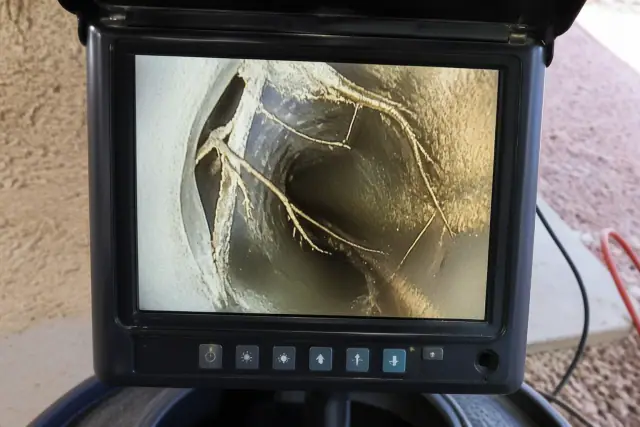
A camera inspection distinguishes root intrusion and corrosion from a fully collapsed section. That condition determines whether lining, bursting, or excavation is viable.
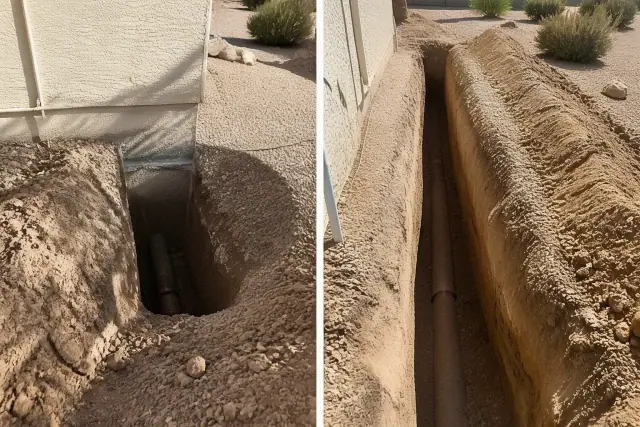
Trenchless work usually needs one or two small access pits instead of a continuous excavation. Avoiding the full trench removes much of the demolition, backfill, and restoration time.
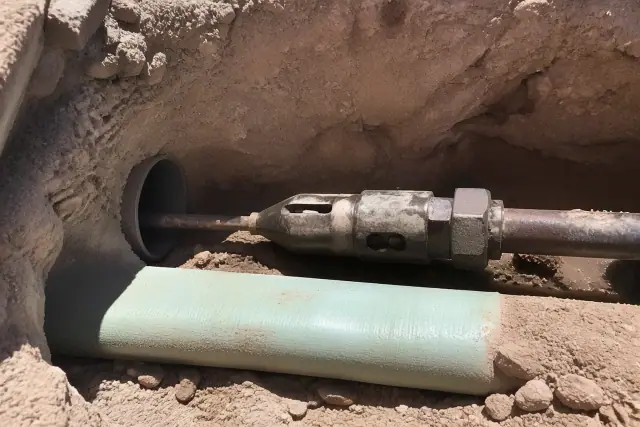
A resin-saturated CIPP liner fits against the host pipe, while a bursting head pulls new HDPE pipe through the old route. The pipe's remaining structure and diameter guide the method choice.
Camera inspection generally takes 1-2 hours. Hydro jetting also typically clears a residential main line in 1-2 hours, although longer commercial lines or heavy grease can take more time.
CIPP installation and cure usually take 4-12 hours. The cure itself ranges from 2-8 hours based on liner thickness and whether hot water, steam, or UV light is used.
Active pulling typically takes 4-8 hours, while access pits, setup, and backfill bring the full job closer to one day. Runs over 100 feet or multiple access points can extend work into a second day.
Dig-and-replace work generally takes 3 days to several weeks because the schedule includes trenching, pipe placement, inspection, backfill, compaction, and surface restoration.
| Repair or Property Scenario | Typical Duration | Main Timeline Variable |
|---|---|---|
| Residential CIPP lining | Often one workday | Installation and cure usually take 4-12 hours. |
| Residential pipe bursting | Usually 1-2 days | Length, depth, and access-pit preparation can add time. |
| Commercial or multi-unit line | Usually 2-3 days | Longer runs and multiple connections require coordination. |
| Traditional excavation | 3 days to several weeks | Trenching, inspection, backfill, and surface restoration extend the schedule. |
The practical concern is how long drains will be unavailable and crews will be on the property. Most homeowners can remain home because trenchless work occurs outside, but water and drains should not be used during active lining or bursting, usually for 4-12 hours. Service is typically restored the same day or by the next morning.
A straight 60-foot lateral clears faster than a line with several bends beneath mature roots. Clay and Orangeburg pipe in Phoenix homes from the 1950s-60s often has more root intrusion than newer PVC, while lines deeper than 6 feet require longer access work. Caliche and expansive clay soils can complicate preparation, and monsoon flooding can delay an excavation-based backup plan.
Can a sewer line be replaced in one day? Many residential lines under 100 feet can, but longer, deeper, or sharply bent lines may need a second day. Is trenchless repair always suitable? No: a fully collapsed pipe, major offset joints, or less than 50% of the original diameter may require excavation, and CIPP slightly reduces interior diameter. How long can the repair last? Properly installed CIPP is engineered for a 50 to 60 year design life, while pipe bursting installs new HDPE pipe with a comparable or longer service life. What can it cost? CIPP lining generally runs $4,000 to $15,000, pipe bursting $3,500 to $20,000 or roughly $60-$250 per linear foot, and lining equipment and labor can run $80-$250 per foot depending on diameter and liner thickness.
A camera inspection establishes pipe condition, access, and the appropriate method before a repair schedule is confirmed. Share the property's symptoms and access details to request an estimate, or call to discuss an inspection.