Structural Collapse
A fully collapsed or crushed pipe has no stable host structure for a liner and no reliable pull path for a bursting head, so the damaged section must be excavated and replaced.
Phoenix Sewers uses sewer camera inspections every week to determine whether trenchless line replacement is appropriate for aging clay, cast iron, and Orangeburg pipes across the Salt River Valley. Trenchless methods can reduce surface disruption, but they cannot reliably solve a fully collapsed pipe, severe offsets, multiple sharp bends, or some forms of heavy root damage. Understanding those limits helps property owners compare lining, pipe bursting, and traditional excavation before approving work.
A fully collapsed or crushed pipe has no stable host structure for a liner and no reliable pull path for a bursting head, so the damaged section must be excavated and replaced.
Lining and pipe bursting still need workable access at each end. Tight space near foundations, retaining walls, or utility lines can prevent access pits or leave too little soil clearance for an old pipe to fracture outward.
A sewer camera inspection identifies the pipe material, diameter, depth, cracks, roots, bellies, and joint offsets before a method is chosen. Skipping that assessment is a common reason trenchless work has to be redone.
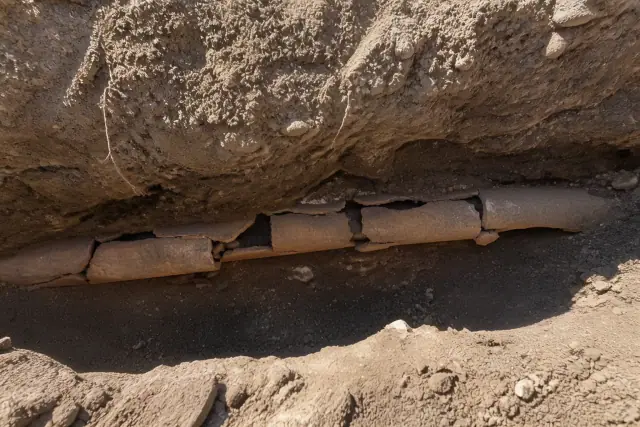
A crushed section or structural gap interrupts the continuous host pipe. Without that stable path, a liner cannot bridge the failure reliably.
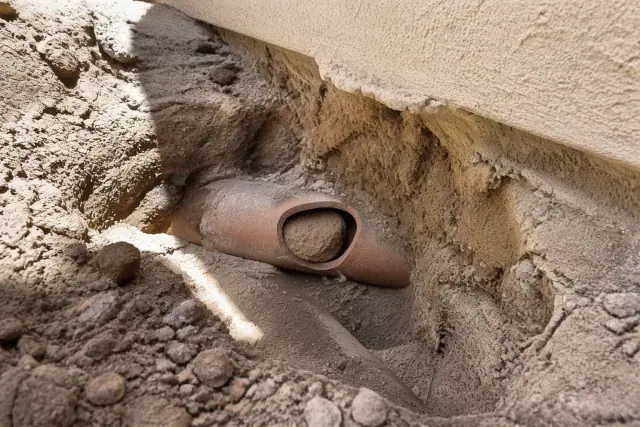
Clay pipe sections can shift out of alignment over decades. A large offset may snag lining material or stop a bursting head from moving through the line.
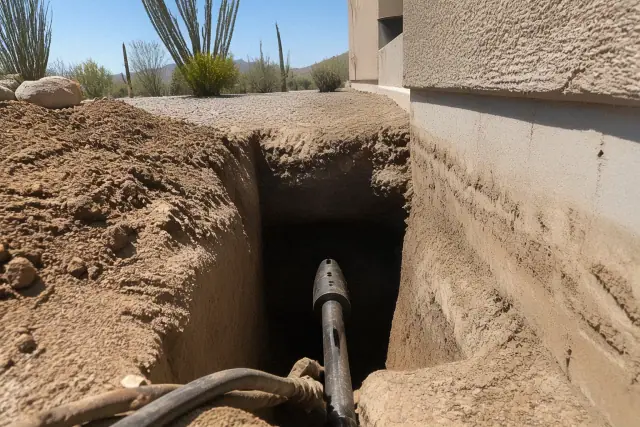
A tight access pit beside a foundation or utility line may leave too little room for pipe-bursting equipment. Clearance can rule out the method even when the sewer pipe itself is reachable.
Trenchless methods are strongest on straight runs that still hold their shape and have cracks or minor root intrusion rather than structural collapse.
Structural gaps larger than a couple of inches and offset joints beyond roughly an inch or two can snag a liner or block a bursting head, making excavation the more dependable option.
Trenchless work can protect landscaping, driveways, parking lots, and walkways, but only when there is enough room to stage equipment and create the required access pits.
Liner material can cost more than open-trench work on a short, simple run, while multiple bends can make lining impractical regardless of surface-restoration savings.
| Factor | Trenchless | Traditional |
|---|---|---|
| Yard disruption | Minimal, with one or two access pits | Full trench along the pipe run |
| Timeline | Often 1-2 days | Can take several days with restoration |
| Best for | Intact pipe, cracks, and minor root intrusion | Collapsed, crushed, or severely offset pipe |
| Cost driver | Liner or bursting material | Excavation, backfill, and surface restoration |
The two principal trenchless methods, cured-in-place pipe lining and pipe bursting, both depend on the old line to preserve a usable shape or pull path. Many Phoenix homes built before the 1970s still have aging Orangeburg or unlined cast iron, so material condition matters as much as the desire to avoid digging. Expansive desert clay can shift sections out of alignment, while the hard calcium carbonate caliche layer can make traditional excavation slower and more expensive when digging is unavoidable.
Pipe length, diameter, access points, depth, and existing damage all affect whether trenchless work is practical. Phoenix-area cured-in-place lining projects typically run $4,000-$15,000, while national estimates for trenchless projects commonly span $1,900 to $6,000 per project; the different ranges make a camera-based scope more useful than a generic price comparison. Lining can slightly reduce the pipe's interior diameter, and pipe bursting needs surrounding soil clearance that may not exist near foundations, retaining walls, or utility lines. Hydro jetting may clear grease, scale, and root intrusion from a structurally sound line, but it does not rebuild a damaged pipe wall.
Can roots be handled without a full dig? Moderate root intrusion may be cleared before lining, but roots that have crushed or displaced the pipe require traditional replacement. How long can a suitable trenchless repair last? A properly installed liner or burst-and-replace section can last 30-50 years when the surrounding soil and connections remain stable. Does depth rule trenchless out? Depth matters less than access; open trenches deeper than 4 feet carry cave-in risk, but trenchless equipment still needs adequate pit space at both ends.
A sewer camera inspection can show whether lining, pipe bursting, hydro jetting, or traditional replacement matches the pipe's actual condition. Share what you have noticed and ask for the findings behind the recommended scope before approving work.